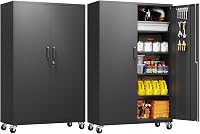
Garage Cabinets on Wheels: Are They Worth It?
Garage cabinets on wheels are worth it when you regularly move tools between work areas and have a clear, level route. Choose stationary storage if the cabinet will stay parked or its required anchoring prevents routine movement.
On this page (9 sections)
- Are garage cabinets on wheels worth it for your setup?
- Which cabinet suits a wide storage space?
- When are stationary cabinets a better choice?
- Which cabinet suits a layout that may change?
- How do you compare wheels and weight limits?
- Which cabinet needs an extra height check?
- Which cabinet suits changing shelf layouts?
- How should you assemble, load, and move the cabinet?
- Which garage cabinets on wheels should you choose?
Garage cabinets on wheels are worth buying when you regularly move stored tools between work areas and have a clear, level route. They're less useful when the cabinet will stay against one wall or needs anchoring that prevents routine movement.
Choose around the way you'll use the cabinet, then compare its size, shelves, and casters. A cabinet that fits beside your workbench may still be too wide to turn past a parked vehicle.
Are garage cabinets on wheels worth it for your setup?
Choose wheels when moving the cabinet solves a recurring storage problem. Bringing a group of supplies beside a project or moving storage to reach a wall outlet can justify the space needed for a rolling route.
Picture one normal job before buying. If you only need a drill and a small box of bits, carrying those items may be easier than moving a tall cabinet.
A rolling cabinet is more useful when several shelves of supplies need to stay together. It also lets you move storage aside for cleaning, provided its installation instructions allow that movement.
If mobility adds little, start with our garage storage cabinets buying guide. Our comparison of rolling vs stationary garage cabinets explains how each fits a garage layout.
What should you measure for rolling garage cabinets?
Measure the parking space and the entire travel route, including turns. Use tape on the floor to mark the cabinet footprint, then check it with the car parked and nearby doors open.
Allow space for cabinet doors, handles, your hands, and access to caster brakes. A route that barely clears the cabinet leaves little room to steer.
Check overhead clearance too, especially beneath shelves or garage door hardware. Use our guide to garage cabinet sizes to plan width, depth, and height together.
Which cabinet suits a wide storage space?
The Yizosh cabinet suits a wider bay where you want room for bulky items and a clear shelf load limit. Skip it if narrow aisles or tight turns are the main reason you're considering mobile storage.
The Yizosh 71 Inch Rolling Locking Metal Cabinet measures 43.3 in wide, 19.6 in deep, and 70.8 in high. Yizosh rates each of its 4 adjustable shelves for up to 180 lb.
That width gives you more room across each shelf than the other cabinets here. Measure your largest tool cases before buying, since outside dimensions don't guarantee usable shelf space.
Its doors open 180 degrees, so check for nearby walls or benches that could limit access. Assembly is required, and a wall mount anchor is included; follow Yizosh's instructions when deciding where it can safely stand and move.
When are stationary cabinets a better choice?
Choose a stationary cabinet when you have a permanent storage spot and no useful route for moving it. Wheels won't solve a cramped aisle, a sloping floor, or a threshold that requires lifting a loaded cabinet.
Fixed storage also makes sense when anchoring is required and you expect frequent access from one workbench. Don't plan to disconnect required restraints each time you need a tool.
If keeping the floor open matters more than moving enclosed storage, compare garage cabinets vs garage shelving. For a wider range of layouts and cabinet types, see our best garage cabinets.
Do locking casters keep a tall cabinet safe?
Caster brakes help resist rolling, but they don't prevent tipping. Keeping heavy items low and following the cabinet's anchoring directions remain necessary.
A door lock serves another purpose: controlling access to the contents. Neither a door lock nor a caster brake replaces required wall anchoring.
Our guide to anchoring tall metal garage cabinets explains what to consider before choosing a parking spot.
Which cabinet suits a layout that may change?
The Greenvelly cabinet suits buyers who may switch from rolling to fixed storage. Its removable wheels offer that option, while its narrower footprint needs less wall width than Yizosh.
The Greenvelly 73 Inch Rolling Metal Garage Cabinet measures 32 in wide, 16 in deep, and 73 in high. Its 4 adjustable shelves each have a 120 lb limit, and it has 4 rubber swivel wheels with locks.
Choose it for tool cases, supplies, and containers that fit that depth. Skip it if your main goal is storing deeper equipment or if individual shelf loads exceed its limit.
Its 3-point door lock comes with 2 keys, which helps manage access in a shared garage. Assembly is required; decide on the wheel setup before loading it, and follow the instructions when converting to stationary use.
How do you compare wheels and weight limits?
Compare shelf, cabinet, and caster limits separately before planning a load. A shelf limit doesn't tell you how much the complete cabinet can safely carry while moving.
Don't multiply a per-shelf figure by the number of shelves and assume the result is a rolling capacity. Our guide to garage cabinet weight capacity explains how to plan shelf loads.
Swivel casters help with turning, but wheel size and floor condition also affect movement. Before buying for rough concrete or a doorway transition, confirm that the caster setup suits that route.
Check which wheels lock and whether the brakes remain reachable when parked. A brake hidden behind a workbench is easy to leave disengaged.
Keep dense tools low and spread loads across each shelf. Avoid concentrating several heavy cases along one edge or storing a large machine high up simply because it fits.
Which cabinet needs an extra height check?
The Letaya cabinet suits shallow storage spaces, but confirm its assembled height before buying for a low-clearance route. Skip it until that measurement is settled if it must pass beneath shelves or other overhead obstacles.
The Letaya Rolling Locking Metal Garage Cabinet measures 31.49 in wide and 15.75 in deep, with a stated overall height of 74.41 in. Letaya also gives a height of 70.87 in, so confirm the assembled height with wheels before ordering.
It has 4 adjustable shelves, detachable 360-degree swivel wheels, and a 3-point door lock. Those features suit mixed-height containers in a narrow storage bay.
Choose it when footprint and shelf spacing drive the decision. For heavy tools, clarify the applicable load limits first, since Letaya's 180 lb capacity statement doesn't clearly identify a per-shelf or whole-cabinet limit.
Which cabinet suits changing shelf layouts?
The SISESOL cabinet suits tall items that need removable shelves and buyers who want detachable, lockable swivel casters. Skip it for a heavy-tool load until you have confirmed the shelf and moving limits.
The SISESOL 75 Inch Rolling Metal Garage Cabinet is about 31.5 in wide, 16 in deep, and 75 in high. Its 4 shelves can be adjusted or removed to make taller compartments.
Plan the shelf layout around what you actually store. Removing a shelf can create space for a tall case, but it shouldn't become a reason to place a heavy item near the top.
The cabinet has a 3-point door lock with 2 keys and requires assembly. Its flexible interior suits changing supplies, while the unknown load limits make it a less direct choice for buyers organizing heavy tools by weight.
How should you assemble, load, and move the cabinet?
Assemble the cabinet fully, check its hardware, and establish a stable parking position before loading it. Follow the instructions for casters, shelf supports, and any required anchoring.
Check that shelf supports are seated and doors close without forcing them. Load the bottom first, keeping frequently used lighter items within easy reach.
Before an allowed move, close the doors and secure loose contents. Clear cords and debris from the route, release the brakes, and move slowly without forcing the cabinet across an obstruction.
Don't use the doors as handles or try to catch a tipping cabinet. If the route requires lifting or tilting a loaded unit, change the route or choose a different storage setup.
For shelf placement, see garage cabinet organization ideas. If reaching upper shelves is awkward, compare short vs tall garage cabinets before committing to tall storage.
What care keeps a rolling cabinet useful?
Keep the casters clear and the cabinet dry. Remove caught debris, wipe spills promptly, and check fasteners and brakes as directed by the manufacturer.
Inspect the cabinet after moving it across a rough patch or bump. A protective finish doesn't remove the need to dry wet areas and address damaged coating according to the brand's care instructions.
Which garage cabinets on wheels should you choose?
Choose Yizosh for a wider storage bay and Greenvelly for a narrower cabinet with removable, locking wheels. Letaya fits a shallow footprint once its height and relevant load limits are confirmed.
Choose SISESOL when removable shelves and lockable casters match your layout, after confirming capacity for your contents. None of these cabinets is a good choice for routine movement if your route or required anchoring prevents it.
Before buying garage cabinets on wheels, mark the footprint and walk the route with your largest stored items in mind. If moving the whole cabinet won't save effort, use our garage storage cabinets buying guide to choose storage around a permanent spot.
Frequently asked questions
Are garage cabinets on wheels worth it?
They are worth it when moving the cabinet saves repeated trips between work areas or lets you reach space behind it. Measure the full route before buying, including turns and doorways, and choose stationary storage if rough floors or required anchoring would keep the cabinet parked.
Can garage cabinets on wheels hold heavy tools?
Some can hold heavy tools, but shelf capacity and moving capacity are separate limits. Match each shelf to its planned load, check the cabinet and caster limits, and keep the heaviest tools low; don't multiply a shelf limit by the shelf count to estimate a safe rolling load.
Do rolling garage cabinets need to be anchored?
Follow the cabinet's anchoring instructions, even if it has wheels. Tall cabinets can tip when loads sit high or doors are open, and caster brakes don't address that risk; if wall anchoring is required, plan to use the cabinet in that secured position rather than disconnecting it for routine movement.
Are locking wheels enough to keep a garage cabinet in place?
Locking wheels help resist rolling on a level floor, but they don't prevent tipping or make a sloped parking spot suitable. Leave room to reach the brakes, check that they engage, and follow the cabinet's anchoring directions; recheck the parking position whenever you move the cabinet.