Do Tall Metal Garage Cabinets Need Anchoring?
To anchor cabinets to a wall, use the cabinet’s designated attachment points and fasteners suited to the wall structure, following its instructions. A freestanding cabinet needs anti-tip restraint; a hanging cabinet needs mounting hardware that supports its weight and contents.
On this page (7 sections)
- Do tall metal garage cabinets need to be anchored?
- How to anchor cabinets to a wall
- What should you check before choosing a cabinet?
- Do rolling or wall-mounted cabinets need the same anchor?
- What mistakes should you avoid when anchoring?
- How should you load and care for an anchored cabinet?
- Which cabinet and attachment should you choose?
To anchor cabinets to a wall, use their designated attachment points and wall-compatible fasteners, following the cabinet instructions. First establish whether you’re restraining a floor-standing cabinet against tipping or hanging a cabinet whose entire load rests on the wall.
That difference controls the hardware you need and the installation steps. Choose your cabinet and location together so you can confirm a suitable attachment before filling shelves.
Do tall metal garage cabinets need to be anchored?
Use the anti-tip attachment required by the cabinet instructions. A tall cabinet’s weight does not make it tip-proof, and storing heavy tools near the top can reduce stability.
The floor must support the cabinet evenly before you attach it. Wall restraint is not a way to pull a leaning cabinet upright or compensate for an unstable base.
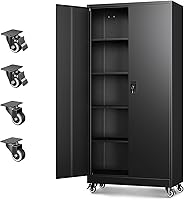
The HOMOFFICE 71 Inch Locking Metal Storage Cabinet suits buyers who need tall, stationary storage with designated anti-tipping holes. Its 4 adjustable shelves have a stated capacity of 120 lb per shelf, useful for planning separate groups of tools and supplies.
Choose it for a permanent floor location where you can complete the required wall restraint. Skip it if you need clear floor space underneath or plan to move your storage often; it is freestanding, not a hanging cabinet.
If you’re comparing tall models, our guide to tall garage cabinets covers storage tradeoffs. Check garage cabinet sizes before deciding how much height and depth your space can take.
How to anchor cabinets to a wall
Prepare the location, identify the wall structure, and install the specified attachment through the cabinet’s intended points. Keep the cabinet empty until assembly and required attachment are complete.
- Read both sets of instructions. Check the cabinet manual and any separate instructions for its anti-tip kit or mounting brackets.
- Confirm the position. Allow room for doors to open and for the attachment hardware to fit behind the cabinet.
- Identify the wall. Establish whether you have wood studs, metal studs, concrete, brick, or another construction.
- Check the drilling area. Consider concealed wiring and pipes; a stud finder alone does not prove a spot is clear.
- Prepare the cabinet. Complete assembly, check that it sits square, and identify every required attachment point.
- Fit the correct hardware. Follow the specified hole sizes, fastening pattern, and tightening directions for the cabinet and fasteners.
- Inspect before loading. Confirm brackets, restraints, and fasteners are seated as instructed, with no damaged or loose parts.
For hanging cabinets, arrange enough help and suitable temporary support to hold the cabinet during installation. Never balance it on loose objects while reaching for tools.
Our guide to assembling a metal storage cabinet covers the assembly stage that comes before wall attachment.
How do you anchor cabinets to a wall with drywall?
Find a suitable attachment behind or through the drywall, as the cabinet instructions require. For wood-framed walls, that commonly means fastening into studs rather than relying on the wallboard.
Metal studs and masonry need different fastening methods. A screw intended for wood is not a substitute for hardware designed for those materials.
If cabinet attachment points miss suitable structure, do not drill random holes through the cabinet back. Ask about an approved rail, backing, or other installation method.
What should you check before choosing a cabinet?
Check wall compatibility, usable space, and the full storage load before buying. A cabinet that fits the gap can still be wrong if its mounting points cannot connect to suitable structure.
Measure baseboards, outlets, door swing, and the distance above a workbench. Baseboards can hold a floor cabinet away from the wall, so confirm how its restraint should bridge that gap without bending the cabinet.
For hanging storage, count the empty cabinet and everything you plan to put inside it. A shelf’s load limit does not guarantee the strength of the wall installation.
Use the garage storage cabinets buying guide to compare storage types before committing to a layout.
The Manhattan Comfort Floating Metal Wall Cabinet suits buyers who want steel storage above a bench or clear floor area. It has 24-gauge metal construction, included mounting brackets, 1 adjustable shelf, and a keyed lock.
Choose it when you want a fixed wall cabinet and can arrange suitable structural attachment. Skip it if you need mobile storage or cannot provide a wall installation that supports its weight and contents.
Included brackets are only part of the installation. Confirm the required wall fasteners and mounting arrangement before starting.
Do rolling or wall-mounted cabinets need the same anchor?
No: anti-tip restraints resist overturning, while hanging-cabinet mounts carry the cabinet’s weight. Neither wheel locks nor door locks replace either attachment.
The GAIOUS 45 Inch Locking Metal Cabinet With Wheels suits buyers who need to reposition storage and secure it again in a regular parking spot. It includes an anti-tip device, lockable swivel wheels, and 3 adjustable shelves.
Skip this model if you expect to roll a loaded cabinet around without managing its required restraint. Before moving it, follow the manual’s unloading and disconnection steps, clear the route, and close the doors.
For more on that tradeoff, read garage cabinets on wheels. Use garage cabinet ideas to choose a parking position that leaves access to frequently used supplies.
The Suncast 4 Cu Ft Resin Wall Cabinet suits buyers who want off-floor storage with a resin body. It measures 30 in wide, 12 in deep, and 30.25 in high, with an adjustable metal-reinforced shelf rated for up to 50 lb.
Choose Suncast if resin is your preference over steel and the available shelf space fits your supplies. Skip it if you need deep storage for bulky equipment or floor-standing capacity for heavy tool collections.
Its handles accept a padlock, sold separately. A locked door controls access but does not increase shelf capacity or strengthen wall mounting.
What mistakes should you avoid when anchoring?
Avoid improvised attachment points, unsuitable fasteners, and loading before installation is complete. Hardware must suit both the cabinet connection and the wall material.
Do not choose fasteners only by length. Their type, required embedment, spacing, and installation method also matter, and wall coverings do not count as structural embedment.
Do not pull mounting screws tight enough to crush resin or distort metal panels. Follow the tightening directions rather than assuming greater force means a stronger connection.
Keep these other mistakes out of your setup:
- Using an anti-tip strap to hang a freestanding cabinet above the floor.
- Treating a shelf capacity as the total cabinet or wall-mount capacity.
- Adding the capacities of individual anchors to invent a safe system load.
- Leaving a cabinet usable while required attachment remains unfinished.
- Letting children climb on shelves or swing from open doors.
If a fastener will not tighten correctly or a hole becomes damaged, stop and resolve the attachment. Adding another screw nearby without checking the repair method can leave the same weakness.
How should you load and care for an anchored cabinet?
Load from the bottom upward and keep heavy items low. Spread items across each shelf and follow any separate limits for the shelves, cabinet body, and mounting system.
Place frequently used supplies where you can reach them without climbing. Keep bulky objects clear of the doors so they close without pressure from inside.
Our guide to how to organize garage cabinets helps you group supplies by task. For load planning, see garage cabinet weight capacity before filling shelves with dense tools or hardware.
Check restraints and visible connections periodically, following the maintenance instructions. Recheck after moving the cabinet, changing its load, or noticing movement, a widening wall gap, or doors that suddenly stop aligning.
Unload and address loose connections before continued use. Wipe up spills promptly, and keep stored chemicals in suitable containers according to their storage directions.
Which cabinet and attachment should you choose?
Choose the cabinet whose installation fits your wall, floor space, and daily use. Knowing how to anchor cabinets to a wall starts with choosing the right storage type.
Pick HOMOFFICE for tall, stationary floor storage, Manhattan Comfort for a steel wall cabinet, or Suncast for a resin wall cabinet. Choose GAIOUS when mobility matters and you can manage its restraint each time you reposition it.
If you cannot confirm a suitable attachment, resolve that before buying or loading the cabinet. Compare garage storage cabinet options with your mounting plan beside you, so storage capacity and installation work together.
Frequently asked questions
Do tall metal garage cabinets need to be anchored?
Use the anti-tip attachment required by your cabinet’s instructions before loading or using it. Tall storage needs careful placement because heavy items stored high and open doors can affect stability.
Keep heavy supplies low, respect load limits, and remember that wall restraint does not correct an uneven base.
Can you anchor a cabinet to drywall?
Drywall alone is not a default attachment point for a cabinet. Use the wall structure and fasteners specified for the cabinet and its intended load, often involving wood studs or suitable masonry.
If the instructions do not cover your wall construction, get installation advice before drilling or loading.
Should a rolling garage cabinet be anchored?
A rolling cabinet needs any anti-tip restraint required by its instructions, even when its wheels lock. Wheel locks control rolling; they do not provide the same restraint against tipping.
Follow the manual for securing the cabinet in its parking position and for disconnecting and restoring the attachment when moving it.
Should you anchor a wall-mounted garage cabinet?
Yes, a wall-mounted cabinet needs a mounting system that supports the cabinet and its contents. Use its specified brackets or rails with fasteners suited to the wall structure.
A shelf capacity describes the shelf’s load limit; it does not guarantee the capacity of the cabinet’s wall attachment.