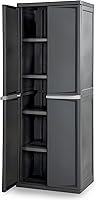
Garage Storage Cabinets: The Complete Buying Guide
Choose garage storage cabinets by matching usable shelf space and load limits to your tools, bins and supplies. Then check the floor footprint, door clearance and anchoring needs before deciding between stationary metal, plastic, resin or rolling storage.
On this page (12 sections)
- What should garage storage cabinets hold?
- How do you measure for garage cabinets?
- Which cabinet material suits a garage?
- How much shelf capacity do you need?
- Should you choose stationary or rolling cabinets?
- What lock should garage cabinets have?
- How many shelves and what layout work best?
- How should you assemble and position a cabinet?
- How do you care for garage storage cabinets?
- Which buying mistakes cause the most trouble?
- Which garage storage cabinet should you choose?
- FAQ
Choose garage storage cabinets by matching their usable shelf space and load limits to what you own. Then check the room needed for the cabinet, open doors and daily access.
For a fixed tool zone, start with a stationary metal cabinet. For lighter household supplies, consider plastic or resin; choose wheels when moving the cabinet solves a clear layout problem.
The most useful cabinet lets you remove one item without unloading a shelf. This guide explains how to get that fit, with four examples for different storage needs.
What should garage storage cabinets hold?
Start with a short inventory of the items going inside, rather than choosing a cabinet and trying to fill it. Size, weight and frequency of use should shape the purchase.
Gather the items into groups such as hand tools, car care, garden supplies, sports gear and household overflow. Separate things that belong elsewhere before counting how much enclosed storage you need.
A cabinet is useful for small supplies, awkward packages and items you want behind doors. Long lumber, large yard tools and frequently used equipment may work better on another storage surface.
Match garage storage cabinets to real shelf groups
Plan each shelf around a task or a set of containers. A shelf for car washing supplies has different spacing needs from one holding socket cases or folded outdoor covers.
Measure the largest item in each group, including handles, lids and anything sticking out. A bin that fits only when tilted can become annoying once it contains loose parts or bottles.
Weigh dense groups together, including the container itself. Several small tool cases can create a heavier shelf load than one large, nearly empty tote.
Keep frequently used items within comfortable reach. Heavy items belong low, while light seasonal supplies can use upper space without making everyday access harder.
For ideas on dividing work, garden and household zones, see garage cabinet ideas.
How do you measure for garage cabinets?
Measure the cabinet space, access space and delivery route separately. A cabinet can fit against a wall yet fail because its doors block a vehicle or its parts cannot reach the assembly area.
Record width, depth and height at the planned location. Check near the floor and higher up, since pipes, outlets, wall trim and overhead shelves can reduce space at different points.
Tape the footprint on the floor with the car parked normally. Walk around it while carrying a laundry basket or tool case, rather than judging clearance from an empty garage.
Check door swing and removal space
Allow enough room to open the doors and pull your largest item straight out. Door clearance alone is not enough if a long case still hits the car.
The two Yizosh examples have doors that open through 180 degrees. That opening needs clear space beside the cabinet, so placing one tightly between obstacles can limit access.
Check nearby vehicle doors, workbench drawers and the door into the house. Your cabinet should work during normal use, with those other parts of the garage still accessible.
Compare outside size with usable shelf space
Use exterior dimensions for floor planning, then use interior dimensions for contents. Frames, hinges and door hardware take space away from the storage area.
A wide cabinet does not guarantee that every wide bin will pass through the door opening. Check both the shelf and the path into it before buying containers.
Measure the narrowest doorway and turn along the delivery route, too. For a fuller explanation of these measurements, read garage cabinet sizes explained.
Which cabinet material suits a garage?
Choose material by load needs, exposure and care, then compare individual models. Steel, plastic and resin are broad categories, not fixed promises about strength or suitability.
Steel is a useful starting point for dense tools when the shelf limits support them. Plastic and resin remove rust from the cabinet body as a concern, but their shelves still need careful load planning.
An enclosed cabinet also does not control the garage climate. Doors can reduce direct exposure to dust and light without making the interior waterproof, airtight or temperature controlled.
Yizosh stationary metal: for a fixed tool and supply zone
Choose the Yizosh 71 Inch Locking Metal Garage Cabinet when you want enclosed storage that stays in one place. It suits mixed tool cases, hardware bins and supplies that need different shelf heights.
Its powder-coated steel body measures 31.5 in wide, 15.7 in deep and about 71 in high. The relatively shallow footprint is worth considering beside a walkway, provided your containers fit inside.
The shelf layout lets you divide smaller supplies into more levels instead of building tall stacks. That helps when you want each tool case accessible without moving the cases above it.
Skip this cabinet for deep, bulky totes unless you have confirmed their interior fit. Also skip it if you need to move storage around regularly, since this version stands on legs.
Yizosh describes the powder finish as scratch and rust resistant. Protect that finish from scraping tool edges, and keep damp equipment from sitting against the panels.
Sterilite plastic: for lighter supplies and simple assembly
Choose the Sterilite 4 Shelf Lockable Utility Cabinet for lighter household overflow, gardening accessories and similar supplies. Its tool-free assembly suits buyers who want to avoid putting together a metal panel cabinet.
It measures about 25.63 in wide, 18.88 in deep and 69.38 in high. The interior shelves measure 17.65 in wide by 13.31 in deep, so container fit deserves close attention.
That interior width makes this a better candidate for smaller grouped containers than for broad storage totes. Measure existing bins before assuming that the exterior footprint describes the shelf space.
Skip Sterilite for a dense collection of heavy tools or a layout built around wide cases. Its adjustable shelves help with height, but adjustment cannot create extra width or depth.
Sterilite describes the cabinet as resistant to dents, chips, peeling and rust. That makes its material useful for general utility storage, without removing the need to keep loads within limits.
Suncast resin: for lawn gear and mixed utility storage
Choose the Suncast 72 Inch Resin Storage Cabinet for lawn gear, hand tools and supplies that benefit from flexible vertical spacing. It offers a different shelf layout from the smaller-compartment approach.
The cabinet is 30 in wide and 72 in high, with multi-wall resin panels. Suncast gives conflicting depth measurements of 17.25 and 20.25 in, so confirm the exact depth before ordering for a tight space.
This is a useful option when several taller groups matter more than numerous short compartments. A compatible BMC3020 add-on shelf gives you another way to divide the space later.
Skip Suncast if you need many separate shelf levels immediately and do not want an accessory. Buyers storing especially dense tool groups should also compare its load limit with the metal options below.
Suncast describes the resin as resistant to dents, rust and rotting. That supports its role as utility storage, but does not guarantee outdoor suitability or weather sealing.
For a closer look at these material choices, read metal vs plastic garage cabinets.
How much shelf capacity do you need?
Choose a per-shelf limit above your planned load, and follow the instructions for distributing that load. Cabinet height and material do not tell you what a particular shelf can support.
The four examples have different manufacturer-specified limits. Use these figures to rule out unsuitable choices before comparing convenience features.
| Cabinet | Shelf arrangement | Manufacturer-specified shelf limit |
|---|---|---|
| Yizosh 71 Inch Locking Metal Garage Cabinet | 5 adjustable shelves | Up to 180 lb per shelf |
| Sterilite 4 Shelf Lockable Utility Cabinet | Adjustable shelves | Recommended 40 lb per shelf |
| Yizosh 71 Inch Rolling Locking Metal Cabinet | 4 adjustable shelves | Up to 180 lb per shelf |
| Suncast 72 Inch Resin Storage Cabinet | 3 adjustable reinforced shelves | Up to 75 lb per shelf |
Do not multiply the shelf figure to invent a whole-cabinet capacity. The cabinet structure, base and movement limits can impose separate restrictions.
Spread loads instead of creating one heavy point
A shelf holding evenly spaced supplies faces a different load pattern from one with a dense object in the middle. Follow the manufacturer's load placement guidance rather than assuming those situations are equal.
A small metal case can concentrate considerable weight on a narrow area. Moving it toward one side or adding a board does not automatically make an excessive load acceptable.
Plan for additions without treating the maximum as your everyday target. A shelf that is already full leaves no room for the extra supplies that often accumulate after the cabinet arrives.
Check capacity again after reorganizing
Recheck the load whenever you combine groups or change shelf positions. Moving several half-full bins onto one shelf can overload it even though the total cabinet contents have not changed.
Make sure every adjustable shelf is seated as directed before loading it. If a shelf bows, a support shifts or the cabinet becomes unstable, unload the affected area and address the cause.
Read how much weight a metal cabinet shelf can hold for more on load distribution and shelf limits.
Should you choose stationary or rolling cabinets?
Choose stationary storage for a permanent zone and rolling storage when repositioning it serves a regular purpose. Wheels are useful only when the floor, route and loading instructions support the move.
A fixed cabinet suits a wall where tools stay near the same workbench. It also avoids planning around a movement route that may later fill with bikes, boxes or parked equipment.
Yizosh rolling metal: for a layout you need to rearrange
Choose the Yizosh 71 Inch Rolling Locking Metal Cabinet when you need a wider enclosed cabinet that can be repositioned. It suits a garage where storage sometimes needs to move for another activity.
It measures 43.3 in wide, 19.6 in deep and 70.8 in high. That footprint needs careful planning beside parked vehicles and along the entire movement route.
The keyed doors help keep supplies enclosed between uses. Still, the reason to choose this version should be a useful movement plan, rather than wheels that you rarely need.
Skip it for rough routes, narrow passages or a cabinet that will always stay parked. A tall rolling cabinet is also a different tool from a low cart designed to keep work supplies close at hand.
Plan the route before loading
Check for floor cracks, slopes, thresholds and clutter before deciding where a rolling cabinet will travel. A cabinet that fits its parking space may still be awkward to move across the garage.
Read the movement instructions separately from the shelf load limits. Those limits do not tell you how much weight the cabinet can carry while rolling.
Remove loose items and close the doors before any permitted move. Follow the instructions for unloading, handling and securing the cabinet once it reaches its new position.
For more help choosing between these layouts, read rolling vs stationary garage cabinets.
What lock should garage cabinets have?
Choose a lock for routine access control, then assess valuable or hazardous contents separately. A utility cabinet lock is not a substitute for storage designed to resist forced entry.
Both Yizosh examples use keyed locks and include 2 keys. Sterilite accepts a standard-sized padlock, while Suncast has padlockable doors with upper and lower latches.
A keyed cabinet keeps access tied to its supplied keys. A padlockable cabinet lets you choose the padlock, provided its dimensions work with the door hardware.
Keep the spare key away from the cabinet and decide who needs access. A lock serves little purpose if the key hangs on the handle.
Check that the doors and latches close correctly before relying on them. Read what a locking storage cabinet does and does not do for a clearer view of their limits.
For chemicals and fuels, follow the container labels and applicable storage rules. Do not assume any of these general utility cabinets provides ventilation, fire protection or spill containment.
How many shelves and what layout work best?
Choose enough shelf levels to avoid unstable stacks, while leaving room for your tallest items. More shelves help only when the contents need those divisions.
Sketch the interior as a set of storage zones before assembly. Give each zone an example item or container, rather than writing vague labels such as “miscellaneous.”
Set shelf heights around removal space
Allow room to grip and lift items out, not just enough height for them to stand. A tight shelf can make a handled bin difficult to remove even when it technically fits.
Keep tall bottles upright when their labels require it. Do not lay them down simply to preserve another shelf level.
Leave useful adjustment room for changing needs. One tall space may be worth more than several shallow spaces if it prevents long items from lying across other supplies.
Make daily items easy to return
Place the things you use most where putting them away takes one step. If returning a tool requires moving three bins, it is more likely to stay on the workbench.
Group small parts in labeled containers and keep similar labels facing forward. Avoid buying a full set of bins until the cabinet is assembled and you can measure its usable openings.
Separate supplies by task, but follow chemical labels when deciding what can share a zone. Convenient grouping should never override storage requirements.
For a practical layout process, see how to organize garage cabinets.
How should you assemble and position a cabinet?
Assemble near the final location on a clear, protected surface, then check alignment before loading. All four examples require assembly, though their methods differ.
Both Yizosh cabinets use a knock-down metal structure, Sterilite requires no tools, and Suncast uses basic tools. Read the relevant instructions first so you know the parts, sequence and space needed.
Check parts before joining panels
Lay out the hardware and identify the panels before starting. Keep small parts together and protect finished surfaces from grit on the garage floor.
Follow the tightening sequence rather than forcing every fastener fully tight at once. Where the instructions allow alignment adjustments, make them before the structure is locked into position.
An extra pair of hands can help hold tall panels safely. For more detailed preparation, read how to assemble a metal storage cabinet.
Resolve door problems before adding weight
Check that the cabinet sits as directed and the doors close freely. A twisted body or unsupported corner can affect alignment.
Do not use stored weight to force a cabinet into shape. Correct the placement or assembly issue, then confirm that the shelves and supports are properly seated.
Garage floors may slope toward the vehicle entrance. Use only manufacturer-approved methods to address uneven support, rather than stacking loose scraps beneath a loaded cabinet.
Complete anchoring before loading
Follow the manufacturer's anchoring instructions for the cabinet and wall. Both Yizosh examples include a wall mount anchor, but the wall still determines the fasteners and method needed.
Check for wiring and plumbing before drilling. Included hardware should not be assumed suitable for every wall construction.
Read how to anchor tall metal cabinets to a wall before planning a tall cabinet installation. For rolling storage, follow the specific instructions for securing it during use and repositioning it.
How do you care for garage storage cabinets?
Keep cabinets dry, clean and within their load limits, and check moving parts when use changes. Small spills and misplaced weight are easier to address before they cause a larger problem.
Wipe up leaks promptly using methods compatible with the cabinet material and the spilled substance. Let damp tools and gear dry before putting them into enclosed storage.
Protect surfaces and shelf supports
Use a mild cleaning method allowed by the manufacturer. Abrasive cleaners and harsh solvents can damage finishes or plastic, so avoid guessing with an unfamiliar cleaner.
Lift heavy cases instead of dragging them across shelves. Check steel surfaces for damaged coating and follow the manufacturer's care advice if you find exposed metal.
Inspect adjustable shelf supports after a move or major reorganization. Keep hinges, latches and any casters free of debris, and follow the maintenance instructions for those parts.
Keep access clear as the garage fills
Leave the door opening and walking route usable after adding other storage. A cabinet can become difficult to use months later when spare boxes build up in front of it.
Avoid turning the cabinet top into an unplanned overflow shelf. Items above comfortable reach can fall or encourage climbing, and the top needs its own approved load guidance.
Review the contents when you change seasonal gear. Remove empty packages, relocate items that no longer belong and check containers for leaks before closing the doors.
Which buying mistakes cause the most trouble?
The biggest mistakes are buying for empty space instead of actual contents and overlooking how the cabinet will work when full. Use these checks before placing an order.
- Choosing by exterior dimensions alone: confirm shelf size and door opening against the largest item.
- Using shelf count as the main value measure: extra shelves are unhelpful if they leave no usable tall space.
- Ignoring concentrated loads: dense tools need more thought than a collection of light boxes.
- Buying wheels without a route: check the floor and every turn between intended positions.
- Treating closed doors as climate protection: ordinary cabinets do not control heat, humidity or condensation.
- Buying bins first: assemble and measure before filling every shelf with matching containers.
- Planning for a packed cabinet: leave room to remove items and return them without rebuilding a stack.
Another common mistake is forcing every storage need into cabinets. Open shelving can make more sense for bulky bins or items you need to see and grab quickly.
Use enclosed storage where doors add value, then combine it with other storage as needed. Our garage cabinets vs garage shelving comparison explains that choice.
Which garage storage cabinet should you choose?
Choose the first cabinet that meets your load, fit and access needs, then compare convenience. A lock, finish or extra shelf cannot make up for a cabinet that blocks parking or fails to fit your tools.
Use this decision order to narrow the options:
- Reject cabinets that cannot fit the contents. Check the largest item, usable opening and shelf spacing.
- Reject cabinets with insufficient shelf capacity. Count containers and planned additions in the load.
- Reject layouts that block daily access. Include open doors, parked vehicles and removal space.
- Choose material and mobility for the remaining options. Favor features that solve a real problem.
- Confirm assembly, placement and anchoring. Make sure you can complete the setup before loading it.
Pick the stationary Yizosh for a fixed tool zone with several separate storage levels. Pick Sterilite for lighter supplies when tool-free assembly and smaller containers fit your plan.
Pick the rolling Yizosh when you have a clear reason and suitable route for repositioning a wider cabinet. Pick Suncast for resin utility storage where taller groups matter more than numerous compartments.
For garage storage cabinets, the final check is practical: can you open the doors, remove the heaviest item and put it back safely? Use our best garage cabinets guide to compare options once those requirements are clear.
FAQ
Interior fit, shelf limits and access decide most garage cabinet choices. These answers cover the checks that matter before ordering.
What should I look for in garage storage cabinets?
Start with usable interior space, shelf load limits and door clearance. Measure your largest container and weigh your heaviest planned shelf group, including its bin.
Then compare material, shelf adjustment, assembly and anchoring needs. Choose wheels only when you have a clear reason and a suitable route for moving the cabinet.
Are metal or plastic garage cabinets better?
Metal suits heavier tools when the specific cabinet has enough shelf capacity, while plastic or resin can suit lighter supplies and rust concerns. Compare individual models rather than judging by material alone.
Neither material makes a cabinet waterproof, suitable for outdoor use or approved for hazardous storage without clear manufacturer guidance.
How deep should garage storage cabinets be?
Choose enough usable depth for your largest item without blocking parking or walking space. Measure containers with their lids and handles, then allow room to remove them without tilting.
Check the cabinet body and open doors separately, because an acceptable closed footprint can still leave too little space for daily access.
Do garage cabinets need to be anchored?
Follow the cabinet manufacturer's anchoring instructions before loading it. Tall cabinets can tip when weight shifts or someone pulls on a door or shelf, so floor placement alone is not a safety plan.
The anchoring guide linked above explains wall materials, suitable fasteners and placement checks to make before installation.
Are garage cabinets with locks secure?
A cabinet lock can limit casual access, but it does not provide the protection of a safe. Match keyed or padlockable doors to your access routine, and keep spare keys somewhere separate.
Hazardous supplies still need storage that meets their label requirements for temperature, ventilation, separation and spill control.
Frequently asked questions
What should I look for in garage storage cabinets?
Start with usable interior space, shelf load limits and door clearance. Measure your largest container and weigh your heaviest planned shelf group, including its bin.
Then compare material, shelf adjustment, assembly and anchoring needs.
Choose wheels only when you have a clear reason and a suitable route for moving the cabinet.
Are metal or plastic garage cabinets better?
Metal suits heavier tools when the specific cabinet has enough shelf capacity, while plastic or resin can suit lighter supplies and rust concerns. Compare individual models rather than judging by material alone.
Neither material makes a cabinet waterproof, suitable for outdoor use or approved for hazardous storage without clear manufacturer guidance.
How deep should garage storage cabinets be?
Choose enough usable depth for your largest item without blocking parking or walking space. Measure containers with their lids and handles, then allow room to remove them without tilting.
Check the cabinet body and open doors separately, because an acceptable closed footprint can still leave too little space for daily access.
Do garage cabinets need to be anchored?
Follow the cabinet manufacturer's anchoring instructions before loading it. Tall cabinets can tip when weight shifts or someone pulls on a door or shelf, so floor placement alone is not a safety plan.
Our guide to anchoring tall metal garage cabinets explains wall materials, suitable fasteners and placement checks.
Are garage cabinets with locks secure?
A cabinet lock can limit casual access, but it does not provide the protection of a safe. Match keyed or padlockable doors to your access routine, and keep spare keys somewhere separate.
Hazardous supplies still need storage that meets their label requirements for temperature, ventilation, separation and spill control.