How to Organize Garage Cabinets
The most useful garage cabinet organization ideas are task-based zones, labeled containers, and reachable shelves. Keep heavy loads low, then choose drawers or shelf spacing around what you store.
On this page (9 sections)
- What are the best garage cabinet organization ideas?
- How should you arrange items on garage cabinet shelves?
- How do you organize small items and tools?
- How can you keep cleaning and chemical supplies organized?
- How should seasonal and bulky items be stored?
- How can you make a cabinet work for everyday use?
- Which mistakes make garage cabinets harder to use?
- How do you maintain an organized garage cabinet?
- Which garage cabinet organization ideas should you try first?
The most useful garage cabinet organization ideas give each task a home, keep daily supplies within reach, and put heavy items low. Sort what you own before buying containers or another cabinet.
A good layout should let you remove one item without unpacking the shelf. Start with one cabinet so you can finish the job and see which changes help.
What are the best garage cabinet organization ideas?
Create zones by task, then divide each zone only as much as needed. Car care, home repairs, gardening, and painting are useful starting groups because their supplies tend to leave the cabinet together.
Empty one cabinet onto a clear surface and separate keepers from trash, duplicates, and items that belong elsewhere. Set aside chemicals that need special storage or disposal.
Measure usable interior width, depth, and shelf clearance before choosing bins. Our guide to garage cabinet sizes explains which dimensions matter, including the difference between outside size and storage space.
Make a rough shelf plan using your largest items first. Leave some open space for returning supplies after a job rather than filling every gap.
How should you arrange items on garage cabinet shelves?
Put dense loads low and frequent-use items within easy reach. Upper shelves suit light, seldom-used supplies that you can retrieve safely.
Spread weight across the shelf instead of gathering heavy tools in one small area. A shelf limit applies to that shelf, so unused capacity elsewhere doesn't make overloading it acceptable.
Keep sharp edges covered or contained, and place tools so handles are easy to grasp. Avoid loose stacks that can shift when you pull out the bottom item.
Install tall cabinets according to their instructions before loading them. Our guide to anchoring tall metal garage cabinets explains what to check, including wall attachment and placement.
How do you organize small items and tools?
Use divided organizers for hardware and removable bins for task groups. Small parts need separation, while larger tools need handles and enough space for easy removal.
Label fasteners by type and size, keeping package details when they help you identify the right part. “Wood screws” may be enough for one box, but a large collection needs more precise labels.
Keep a task bin light enough to carry comfortably. Several smaller groups are easier to handle than one deep container filled with every tool you own.
Which garage cabinet organization ideas work best with drawers?
Choose drawers for small tools and parts, especially when loose supplies would disappear behind taller containers. Shelves make more sense for cases, bottles, and bulky items.
The Wanfu 36 Inch Locking Metal Cabinet With Drawers suits a repair area where you need both types of storage. It has two lockable drawers, one adjustable shelf, and a powder-coated steel body.
Its dimensions are 31.5 in wide, 15.75 in deep, and 36.2 in high, with a stated shelf capacity of 180 lb. That shelf figure does not tell you how much weight the drawers can carry.
Choose it for small-tool sorting without a tall cabinet. Skip it if your main need is vertical storage for several large containers, and measure drawer interiors before buying fitted dividers.
For a broader storage plan, see garage cabinet ideas for what to store and where.
How can you keep cleaning and chemical supplies organized?
Keep supplies in their original containers and stored as their labels direct. Separate incompatible products even when they belong to the same task.
Use a compatible tray for minor drips only where storage directions allow it. A lock limits access, but an ordinary household cabinet is not a substitute for storage designed for hazardous or flammable materials.
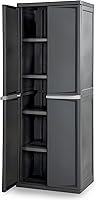
The Keter Resin Storage Cabinet With Doors suits household supplies where moisture is a concern. Keter describes its resin construction as resistant to rust, rot, and moisture damage.
It measures 19.6 in wide, 25.5 in deep, and 72.6 in high at its widest points, including handles and feet. Each shelf has a stated capacity of 55 lb, and the doors accept a padlock purchased separately.
Choose it for lighter supplies grouped across several shelves. Skip it for dense tool storage that exceeds those limits, or where its depth would crowd the parking space.
Use shallow bins near the front so bottles don't vanish behind one another. Moisture-resistant cabinet material does not make stored contents safe from leaks, heat, or freezing.
How should seasonal and bulky items be stored?
Store seasonal items in clearly labeled groups sized for safe lifting. Keep heavy seasonal gear low even if you use it only once a year.
Measure containers with their lids and handles, then allow room to grip them. Door openings and hinges can restrict access even when a bin fits the shelf.
The Greenvelly 72 Inch Locking Metal Cabinet suits changing collections of tool cases, seasonal supplies, and containers of different heights. Its four adjustable shelves let you change the layout rather than force everything into equal spaces.
The steel cabinet measures 32 in wide, 16 in deep, and 72 in high. Greenvelly specifies 180 lb per shelf and 900 lb total, so both limits matter when planning loads.
Choose it when shelf flexibility matters more than built-in drawers. Skip it if most of your storage is loose hardware, unless you also plan to use divided organizers.
For oversized containers, compare usable space with our guide to garage cabinet depth. More depth helps only when you can still reach and remove what's at the back.
How can you make a cabinet work for everyday use?
Build everyday storage around the order you use things. Put the supplies you grab together in the same zone, with refill stock behind or below the active container.
Avoid attaching racks or hooks to doors unless the cabinet instructions allow them. Added weight can affect closing and strain parts that weren't designed to carry it.
The Letaya Locking Metal Cabinet With Drawer suits a mixed layout of small supplies and larger tools. It combines a lockable drawer, four lockable doors, two adjustable shelves, and adjustable feet.
It measures 32 in wide, 16 in deep, and 71 in high. Choose it when separate compartments help you divide tasks, especially if you need feet that adjust to the floor.
Skip it if your largest cases need one uninterrupted storage area. Check compartment openings and drawer clearance before deciding that the overall cabinet size is enough.
Set the feet so the cabinet sits securely, then follow its installation instructions. Use our garage cabinet weight capacity guide to plan load placement before filling it.
Which mistakes make garage cabinets harder to use?
The biggest mistakes are buying containers too early and packing shelves too tightly. Sort first, then buy only the organizers that solve a clear problem.
Don't stack frequently used bins behind or beneath other containers. Reserve those positions for supplies you rarely need, with labels you can still read.
Don't assume an adjustable shelf can move while loaded. Empty it first, reset every support at the same height, and confirm that the shelf sits correctly before refilling it.
Keep cabinet access separate from parking and walking space. Check that doors and drawers can open with the car parked where it normally sits.
How do you maintain an organized garage cabinet?
Return supplies to their zones and review crowded shelves after projects. A short reset prevents half-used materials and empty packaging from taking over.
Wipe spills promptly using a cleaner suited to the cabinet finish. Keter recommends soap and water for its resin cabinet; dry metal surfaces after cleaning and follow the cabinet's care instructions.
Check for leaks, damaged containers, loose hardware, and shelves that no longer sit correctly. If a cabinet becomes unstable or a shelf bends, stop loading it and follow the manufacturer's guidance for safe unloading and inspection.
When your needs outgrow the layout, use the complete garage storage cabinet buying guide to decide whether another cabinet would solve the problem.
Which garage cabinet organization ideas should you try first?
Start with task zones, reachable daily supplies, and heavy loads low. These garage cabinet organization ideas work before you spend anything on new storage.
Choose Wanfu for small-tool sorting in a shorter cabinet, Keter for lighter household supplies, Greenvelly for flexible shelf spacing, or Letaya for separate compartments plus a drawer. Match the cabinet to your largest stored items and the way you retrieve them.
Before ordering, sketch your shelf groups using these garage cabinet organization ideas and cabinet layouts. Buy only after the sketch shows where your current setup falls short.
Frequently asked questions
How should I organize garage cabinets?
Organize garage cabinets by task, with heavy items low and frequent-use supplies within easy reach; empty one cabinet, sort its contents, and measure the usable shelf space before buying bins. Label each zone and leave enough clearance to remove a container without moving the items beside it.
What should go in garage cabinets?
Garage cabinets suit tools, hardware, project supplies, and seasonal items that tolerate garage conditions; store chemicals only where their labels allow, in their original containers and away from incompatible products. A household cabinet with a lock does not replace storage designed for hazardous materials or protect contents from extreme temperatures.
How do I organize a garage cabinet with adjustable shelves?
Set adjustable shelves around your tallest containers, leaving room to grip and lift them out; group items before moving shelf supports so you know which spaces need more height. Unload each shelf before adjusting it, seat every support correctly, and keep dense loads toward the bottom of the cabinet.
How can I make garage cabinets easier to use?
Keep daily tools near the front, label bins on the side you see, and give each shelf a clear job; use removable task bins when several supplies travel to the same work area. Review crowded zones after a project and remove empty packaging before buying more containers or another cabinet.