Tall vs Short Metal Storage Cabinets: Which Fits Better? (November 2026)
Choose a short garage storage cabinet for low clearances and easier access to upper shelves. Choose a tall cabinet when you need more enclosed storage within a similar floor footprint.
On this page (8 sections)
- When does a short garage storage cabinet fit better?
- Which cabinet suits your tools and daily routine?
- How do you check usable shelf space before buying?
- How should you assemble and position a metal cabinet?
- How do you organize and care for the cabinet?
- What mistakes make a short cabinet less useful?
- Should you combine a short cabinet with open shelves?
- Which short garage storage cabinet should you choose?
Choose a short garage storage cabinet for low clearances and lower upper shelves, or a tall cabinet to use a clear wall more fully. The right choice depends on what you store, how often you reach for it and the space available with the doors open.
For a low spot, start with the Greenvelly. Choose the taller Yizosh for more enclosed vertical storage, or consider the wheeled GAIOUS when a narrower cabinet and occasional repositioning suit your work area.
Measure before comparing features. Our garage cabinet sizes guide explains how width, depth and height affect the space you can use.

 Best for under-counter storage
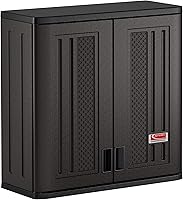
Greenvelly 36 Inch Locking Metal Cabinet
When does a short garage storage cabinet fit better?
A short cabinet fits better beneath fixed obstructions or where you want upper shelves within easier reach. A tall cabinet makes more sense along a clear wall when you have many items to separate.
The Yizosh measures 31.5 in wide, 15.7 in deep and 71 in high. The Greenvelly measures 32 in wide, 16 in deep and 36 in high, so choosing the shorter cabinet saves height rather than floor space.
The GAIOUS measures 23.62 in wide, 11.81 in deep and 45.67 in high. It takes up less width and depth, but its middle height still rules out many under-counter locations.
How much clearance does a short garage storage cabinet need?
You need clearance beneath the lowest obstruction, plus any room required for placement and installation. Measure from the floor to counter rails, shelf brackets and pipes, not just to the underside of the main surface.
Take readings at both sides and the back of the intended spot. A sloped garage floor can leave less clearance at one corner than another.
Check baseboards and rear obstructions too. They can push the cabinet forward, which reduces aisle space and may affect how its anti-tip attachment reaches the wall.
Does a shorter cabinet save walking space?
A shorter cabinet saves walking space only if its width or depth is smaller. The tall Yizosh and short Greenvelly have similar footprints, so neither gives you much more aisle room than the other.
Mark the cabinet outline with tape, then allow for open doors and your body. Repeat this check with the car parked and nearby drawers open.
A door that clears the car by a small gap may still leave no room to remove a tool case. For broader layout choices, use the complete garage cabinet buying guide.
Which cabinet suits your tools and daily routine?
Choose by the items you need to access, then use height to narrow the options. Tall storage favors separate zones, low storage favors easier upper-shelf access, and shallow storage favors smaller items.
A cabinet that holds everything but hides everyday tools behind stacked boxes is a poor match. Plan the interior around your largest cases and most frequent jobs before buying.
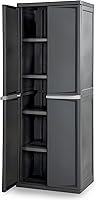
Yizosh 71 Inch Locking Metal Garage Cabinet
Choose the Yizosh for crowded garages where a clear wall can hold more supplies vertically. Its 5 adjustable shelves let you separate cleaning supplies, repair parts and tool accessories instead of building deep stacks.
Yizosh gives a capacity of up to 180 lb per shelf. Follow its load-distribution instructions, and don't multiply that figure into an assumed whole-cabinet capacity.
This is the strongest choice here when you need several storage zones within roughly the same floor area as the short option. Keep frequent-use tools in the middle and reserve upper shelves for light items you use less often.
Skip it beneath low shelving or if reaching overhead is difficult. A tall enclosure won't improve your routine if you need to retrieve a step stool for everyday supplies.
Its doors open 180 degrees, which helps expose the interior when surrounding space allows. Plan wall attachment before assembly, since the cabinet includes a wall-mount anchor.
Greenvelly 36 Inch Locking Metal Cabinet
Choose the Greenvelly for under-counter storage after measuring the actual opening. Its 2 adjustable shelves suit a smaller collection of tools, parts and supplies that you want behind doors.
The lower upper shelves can make it easier to see and remove small containers. You'll still need to bend for the bottom storage area, so place frequent-use items at the most comfortable level.
Skip it if you need many separate shelf zones or expect tall storage on a compact floor footprint. Its width and depth are close to the Yizosh, despite the much shorter frame.
Confirm load limits before choosing it for dense tools such as socket sets or power-tool cases. Its height and steel construction alone don't tell you how much each storage surface can support.
The cabinet has anti-tip holes and includes expansion screws. Match the attachment method to your wall, and don't assume the top can support a separate work surface or heavy equipment.
GAIOUS 45 Inch Locking Metal Cabinet With Wheels
Choose the GAIOUS for shared work areas where a narrow cabinet and occasional repositioning help. Its 3 adjustable shelves can be removed or moved to make room for items of different heights.
The shallow body suits smaller supplies better than deep tool cases. Measure cases with their handles, latches and hinges included, then allow room to close the doors without pressing against them.
Its wheels swivel and lock, and it has a 3-point locking system. Those features serve different jobs: the wheels control movement, while the door lock controls access.
Skip it if you mainly need storage beneath a standard work surface or plan to cross rough floors often. Wheels also add little value if the required anti-tip setup prevents the movement you have in mind.
Plan a fixed parking position and check the movement instructions before loading. The included anti-tip device needs to be part of that plan.
How do you check usable shelf space before buying?
Measure your largest items and their removal path, not just the cabinet's outside dimensions. Exterior width and depth include parts of the cabinet that don't become usable shelf space.
Start with bulky cases, bins and tall bottles. Record their full dimensions, including handles, and note whether they must stay upright.
Adjustable shelves change vertical spacing, but they can't make a cabinet wider or deeper. Removing a shelf may fit one tall item while reducing the number of separate storage zones.
Plan around items you already have
Group supplies by task before choosing bins. A bike-repair group, car-care group and home-repair group may need different shelf heights.
Leave enough space above a container to grip and lift it. A tight fit can force you to drag the container out or remove neighboring items first.
Separate shelf capacity from cabinet capacity
A shelf limit applies to that shelf under its stated conditions. It doesn't guarantee the capacity of the base, cabinet top, wheels or whole structure.
For concentrated loads, such as a heavy toolbox on small feet, follow the cabinet's placement guidance. Our garage cabinet weight-capacity guide explains how load placement affects shelf use.
How should you assemble and position a metal cabinet?
Assemble near the final location and square the frame before loading it. Moving an empty cabinet into place is easier to plan than moving one packed with tools.
Clear a floor area large enough to lay out the panels without blocking your exit. Protect the finish from grit, then sort hardware and identify the top, bottom and rear parts.
Follow the assembly order rather than tightening every fastener as soon as it goes in. Where the instructions allow, leaving connections slightly loose until the frame is aligned can help the doors meet properly.
Check that shelf supports sit at matching heights and engage fully. A shelf that rocks or sits diagonally needs correction before you put anything on it.
Both Greenvelly and GAIOUS recommend 2 people for assembly. Have suitable tools ready, and use the metal cabinet assembly guide to plan the work area and sequence.
Anchor for the wall you have
All 3 cabinets have anti-tip provisions, so don't treat shorter height as permission to ignore attachment instructions. Read how to anchor tall metal garage cabinets before choosing the location.
Identify the wall construction and check for hidden wiring or plumbing before drilling. Included hardware may not suit every wall, so use attachments that match both the cabinet instructions and the wall.
Check the floor before loading
The cabinet should sit without rocking, and the doors should open and close without catching. Don't use stored weight to force an uneven cabinet to settle.
For rolling storage, check floor joints, slopes and thresholds along the intended route. Lock the wheels when parked, and follow the required loading and anti-tip steps before any move.
How do you organize and care for the cabinet?
Keep heavy tools low and everyday items within comfortable reach. This arrangement reduces awkward lifting and helps you avoid pulling several objects out to reach one item.
Assign each shelf a job, then label containers by contents or task. Small parts are easier to manage in divided containers than in a loose pile behind a locked door.
Put dry items away, wipe spills promptly and dry cleaned metal surfaces. Follow the finish-care instructions and avoid leaving wet tools or rags against shelves and panels.
Powder coating on the Yizosh and GAIOUS doesn't remove the need to manage moisture. Check corners and the base for standing water, especially near a garage entrance.
Inspect shelf supports, fasteners and door alignment after setup and during use. For the wheeled cabinet, also check wheel attachments and locks as directed.
Use our garage cabinet organization guide for storage zones. The garage cabinet ideas guide can help you decide which supplies belong indoors, on shelves or behind cabinet doors.
What mistakes make a short cabinet less useful?
Buying for height alone is the biggest mistake. A cabinet can clear the counter yet fail to hold your tool cases or open fully beside a parked car.
Avoid these other common errors:
- Treating the top as a workbench: Get an approved top-load limit and intended-use guidance before adding equipment or a work surface.
- Buying bins too early: Check usable interior dimensions and shelf spacing before choosing containers.
- Overfilling the upper shelves: Leave room to grip items and see what sits behind them.
- Confusing a lock with secure hazard storage: A keyed cabinet doesn't guarantee suitability for fuel, flammable liquids or other materials with special storage requirements.
- Planning movement after loading: Decide how a wheeled cabinet will be parked, attached and moved before filling it.
Keep both keys somewhere you can find them without opening the cabinet. Avoid storing the only spare inside the locked enclosure.
Should you combine a short cabinet with open shelves?
Combine them when only some items need enclosed storage. A short cabinet can hold small tools and loose supplies, while separate shelving above holds larger bins.
Leave enough space between the cabinet and wall shelves to retrieve items comfortably. Keep overhead storage from blocking access to the cabinet's anti-tip attachment or encouraging heavy stacks on its top.
Open shelves also remove the need for door-swing space at those storage levels. Compare garage cabinets vs shelving if bulky items make enclosed storage feel restrictive.
Which short garage storage cabinet should you choose?
Choose the Greenvelly for a measured low-clearance spot and a modest collection of supplies. Choose the Yizosh if your wall is clear and separating more items matters more than keeping upper shelves low.
Pick the GAIOUS for a narrower work area where its shallow interior fits your tools and its movement instructions suit your routine. Confirm how the anti-tip setup works with your planned parking position before choosing wheels.
Before ordering a short garage storage cabinet, write down the available opening, largest stored item and required load. If those checks don't fit, change the cabinet or location rather than relying on a tight squeeze.
Use the garage cabinet sizes guide to make that final fit check.
Frequently asked questions
Is a tall or short garage cabinet better?
A short cabinet is better beneath low obstructions, while a tall cabinet makes better use of a clear wall. Choose by your stored items and daily reach, then check the footprint with the doors open; extra height helps only when you can use the upper shelves safely.
How tall should a short garage storage cabinet be?
A short garage storage cabinet should fit beneath the lowest obstruction with enough room for placement and any required attachments; the Greenvelly here is 36 in tall. Measure to the underside of counter rails, brackets or pipes, rather than assuming the counter's top height gives you usable clearance.
Do tall metal garage cabinets need to be anchored?
Follow the cabinet's anti-tip instructions regardless of height; the Yizosh includes a wall-mount anchor, and both shorter options also have anti-tip provisions. Match attachments to the wall construction and follow the required placement; a short frame or locked wheels do not remove the need for proper installation.
Can a short cabinet hold heavy tools?
A short cabinet can hold heavy tools only within its shelf, base and overall load limits; confirm those limits for the exact model before buying for dense tool storage. Keep heavier items low, spread loads as directed, and avoid using one shelf's capacity as the whole cabinet's allowance.
Should I choose a rolling cabinet instead?
Choose a rolling cabinet when occasional repositioning helps your work and the cabinet's movement instructions allow it; check the route for slopes, thresholds and rough joints before buying. Plan a level parking spot, lock the wheels when parked, and follow the anti-tip guidance before moving or loading the cabinet.