How to Assemble a Metal Storage Cabinet
To assemble a metal storage cabinet, sort the parts, follow the manual's order, and square the frame before final tightening. Fit shelves, doors, and wheels when directed, then finish required wall anchoring before loading.
On this page (9 sections)
- What should you check before choosing a cabinet?
- What should you do before assembling a metal storage cabinet?
- How do you assemble the cabinet frame?
- How should you fit shelves and doors?
- What should you check before loading the cabinet?
- How do you handle a tall or wheeled cabinet?
- Why do cabinet doors or shelves fail to line up?
- When should you anchor and maintain the cabinet?
- How to assemble a metal storage cabinet and choose the right layout
To assemble a metal storage cabinet, sort the parts, follow the manual's order, and square the frame before final tightening. Fit shelves, doors, and wheels when directed, then finish required wall anchoring before loading.
The main mistake is tightening everything before the panels line up. Build on a level surface, support loose panels, and stop if a fastener won't start easily.
What should you check before choosing a cabinet?
Choose around your storage, floor space, and assembly needs before comparing small features. Drawers suit loose tools, open shelf space suits bins, and wheels suit a cabinet that needs to change position.
Measure the cabinet's full footprint, door swing, and route into the room. Leave room to stand in front and remove your largest item without turning it sideways.
Outside dimensions don't tell you the usable shelf opening. Measure your bins and tool cases, then use our garage cabinet size guide to plan the fit.
A lock helps control access, but it doesn't make an ordinary cabinet suitable for every chemical or flammable material. Follow each stored item's storage instructions.
For a broader comparison of layouts and materials, start with the garage storage cabinet buying guide.
What should you do before assembling a metal storage cabinet?
Read the full manual and inventory the parts before joining panels. Check for damage, missing hardware, and similar-looking pieces that face different directions.
Choose a level work area near the final location, with space to lay panels flat. Protect the floor with cardboard or a blanket, and keep children and pets away from metal edges and loose hardware.
Group fasteners by size in separate containers without losing their labels. Compare each panel's holes and folded edges with the drawings before deciding which way it faces.
Don't drill new holes to solve a mismatch. A reversed panel or wrong screw can look like a manufacturing fault until you compare it with the instructions.
The Wanfu measures 31.5 in wide, 15.75 in deep, and 36.2 in high. Its 2 lockable drawers suit small tools or office supplies that would get lost in a large storage bin.
Choose it for divided storage at a lower height; skip it if tall equipment is your main storage need. Its single adjustable shelf offers less vertical sorting than the taller cabinets here.
Keep the drawer hardware separate during the parts check. Mixing it with the body fasteners creates extra work when you reach the drawer steps.
How do you assemble the cabinet frame?
Build the body in the manual's sequence, keeping connections loose only where the instructions allow. Final tightening comes after the panels sit in their correct positions.
Start with the base and sides if that is the specified order. Have a helper support tall panels instead of balancing them against a wall.
Check the back panel's orientation before fastening it. An incorrect position can affect the whole frame and leave later holes out of line.
Start threaded fasteners by hand where practical. If one resists immediately, remove it and check the hole alignment and fastener size rather than driving it harder.
Use controlled pressure for final tightening. Overtightening can strip threads or pull thin panels out of shape.
How do you keep a metal storage cabinet square during assembly?
Check the frame opening before final tightening so the doors have an even space to fit. Where the design permits, compare both diagonal measurements across the same rectangular opening.
Unequal diagonals suggest the frame needs adjustment. Support the cabinet, loosen only the connections the manual allows, and bring the panels into alignment before securing them again.
Adjustable feet can correct floor unevenness when used as directed. They won't correct panels joined in the wrong position.
How should you fit shelves and doors?
Seat every shelf support fully and check door movement before loading. Follow the cabinet's instructions for installation order, since doors and shelves don't attach the same way on every model.
Set all supports for one shelf at matching heights. Lower the shelf onto them and check each corner rather than assuming a level-looking shelf is secure.
Plan spacing around actual items, including clearance to lift a bin over the shelf edge. Removing a shelf for a tall object also removes a storage level, so decide what must fit first.
The HOMOFFICE measures 31.49 in wide, 16.53 in deep, and 70.86 in high. Its manual and installation video suit buyers who want both written and visual assembly guidance.
Choose it for a tall, fixed storage position with several shelf levels. Skip it if you need drawers for loose parts or wheels for frequent repositioning.
HOMOFFICE specifies 120 lb per shelf and includes anti-tipping holes. Plan the wall connection before filling the upper shelves.
Fit the doors and check the gaps, swing, and latch operation. If a door scrapes, check the frame and hardware positions before adjusting anything; don't bend the door to force a fit.
What should you check before loading the cabinet?
Check stability, shelf seating, door operation, and required anchoring before adding storage. A cabinet that looks finished may still have an unsecured support or incomplete wall connection.
Put heavy items low and spread weight across the shelf surface. A shelf limit isn't automatically the cabinet's total capacity; see how much weight a metal cabinet shelf can hold.
The GAIOUS measures 23.62 in wide, 11.81 in deep, and 45.67 in high. Choose it for smaller supplies in a narrow space; skip it if deep tool cases or bulky bins drive your storage needs.
GAIOUS recommends 2 people and about 60 minutes for assembly. It includes labeled parts, hardware, and instructions, but you'll need your own screwdriver.
Complete the anti-tip setup as directed and lock the wheels while stationary. Don't assume it can move while loaded or attached to the wall.
For a fixed layout, use our garage cabinet organization guide to group supplies before choosing shelf heights.
How do you handle a tall or wheeled cabinet?
Support tall panels and install wheels at the specified step. A partly built cabinet can twist or fall if you stand it up before its structure is secure.
Plan how you'll reach the wheel attachment points before starting. Don't tip a completed cabinet alone to fit hardware that should have gone on earlier.
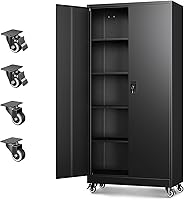
Choose the Letaya for tall shelf storage where detachable wheels serve a clear purpose. It has 4 adjustable shelves, a three-point lock, and wall-mounting holes.
Letaya estimates about 30 minutes for assembly and includes installation tools. Leave additional time to check alignment and prepare any required anchoring.
Skip it if overhead clearance is tight without first confirming the overall height for your setup: the dimensions include both 70.87 in and 74.41 in heights. Allow room to position and secure the cabinet, too.
Before moving any wheeled cabinet, clear the route and follow its handling limits. Thresholds, debris, and sloped floors need particular attention.
Use these garage cabinet ideas for what to store and where to decide whether a movable cabinet improves your layout.
Why do cabinet doors or shelves fail to line up?
Check orientation, frame alignment, and support positions before applying force. More tightening won't fix a reversed panel or shelf clip placed in the wrong slot.
For uneven doors, confirm the cabinet sits level, then inspect the frame and hinge positions. Support affected parts before loosening any connections.
For a rocking shelf, unload it and check every support. Replace damaged or missing hardware with the correct part rather than using a loose substitute.
For drawers that bind, check rail placement and fastener choice against the drawings. Don't load a drawer until it travels and closes properly.
When should you anchor and maintain the cabinet?
Finish required anchoring before loading, then check the cabinet as part of routine use. Use wall fasteners suited to the wall construction and the cabinet's instructions.
Weight and locked wheels don't remove tipping risk. Read whether tall metal garage cabinets need to be anchored before choosing the final position.
Keep the finish clean with a soft cloth and mild cleaner, following the brand's care directions. Dry spills promptly and avoid abrasive pads that can scratch the coating.
Check shelf supports after changing their height and inspect accessible connections after moving the cabinet. Recheck door operation if it begins to scrape or latch poorly.
How to assemble a metal storage cabinet and choose the right layout
Choose the storage layout first, then follow the manual through alignment and anchoring. The right cabinet should fit both your belongings and the space needed to use them.
Pick Wanfu for small items that need drawers, or HOMOFFICE for tall shelf storage in a fixed position. Choose GAIOUS for a narrow footprint, or Letaya when tall storage and detachable wheels fit your plan.
How to assemble metal storage cabinet: quick checklist
Finish these checks before adding weight. Keep the manual and spare labeled hardware for later shelf changes or adjustments.
- Inventory parts and confirm panel orientation.
- Build the body in the specified order.
- Square the frame before final tightening.
- Fit shelves, doors, drawers, and wheels as directed.
- Complete required anchoring and check moving parts.
If assembly space or lifting help is the deciding issue, compare assembled and ready-to-assemble metal storage cabinets. Once the cabinet is secure, use the garage cabinet organization guide to place everyday items within easy reach.
Frequently asked questions
How long does it take to assemble a metal storage cabinet?
Allow time for sorting parts, building the cabinet, aligning doors, and completing required anchoring. Letaya estimates about 30 minutes for assembly, while GAIOUS estimates about 60 minutes and recommends 2 people.
Those estimates aren't a deadline; leave extra time for checking hardware and preparing the wall connection.
Can one person assemble a metal storage cabinet?
Use the number of people the instructions recommend; GAIOUS recommends 2 people for its cabinet. A helper can hold tall panels steady and help position the body without twisting it.
If you can't support a part while fastening it, stop and get help before continuing that step.
What tools do I need to assemble a metal cabinet?
Gather the tools named in your cabinet's manual before opening the hardware bags. Letaya includes installation tools, while GAIOUS calls for a screwdriver that isn't included.
A tape measure helps check frame alignment, and wall anchoring may need separate tools and fasteners suited to your wall.
Should I anchor a metal storage cabinet to the wall?
Complete any anchoring required by the cabinet's instructions before loading it, using fasteners suited to the wall and cabinet. Wheel locks prevent rolling but don't prevent tipping.
Read our guide to anchoring tall metal garage cabinets to plan the connection and choose a suitable location before assembly.