Sterilite 4 Shelf Cabinet Review: Worth It? (November 2026)
The Sterilite 4 shelf cabinet suits everyday household storage when you want adjustable shelves and no-tool assembly. Choose it for smaller supplies within its 40 lb recommended shelf limit; choose a reinforced alternative for heavier loads.
On this page (9 sections)
- The Sterilite 4 shelf cabinet at a glance
- How much room does the Sterilite cabinet need?
- What can you store on the adjustable shelves?
- How should you assemble and load it?
- Does the lock make the cabinet secure?
- How does it compare with the resin alternatives?
- How do you care for a plastic utility cabinet?
- Which buying mistakes should you avoid?
- Is the Sterilite 4 shelf cabinet the right choice?
The Sterilite 4 shelf cabinet is a good fit for everyday household supplies when you want closed storage, adjustable shelves and no-tool assembly. Its main buying check is usable shelf space: a tall exterior does not mean large bins will fit inside.
Choose it for smaller items you can sort into clear groups, such as cleaning accessories, pantry overflow or compact tool kits. For dense tools, bulky cases or a crowded floor, one of the resin alternatives below makes more sense.
The Sterilite 4 shelf cabinet at a glance
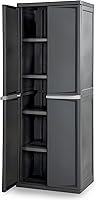
The Sterilite offers a flexible layout for smaller supplies, with doors that hide clutter and accept a standard-sized padlock. Its tall, freestanding format works best where you can reach the shelves without blocking a walkway.
Sterilite 4 Shelf Lockable Utility Cabinet: Best for everyday household storage

- Adjustable shelves
- 40 lb recommended limit per shelf
- No-tool assembly
- Standard-sized padlock accommodation
Choose this tall plastic cabinet for smaller household supplies and a shelf layout you can change. No-tool assembly makes it a useful option when you want closed storage without a tool-based build.
Pros
- Adjustable shelves accommodate changing storage needs
- No tools required for assembly
- Accommodates a standard-sized padlock
- Sterilite says the cabinet resists dents, chips, peeling and rust
Cons
- Interior shelf area limits larger bins and cases
- Lower shelf load limit than the alternatives here
- Tall format needs overhead and door clearance
Sterilite says the plastic cabinet resists dents, chips, peeling and rust. That makes it worth considering for garages, basements and laundry rooms where you want an alternative to metal storage.
The strongest reason to choose it is convenience: you can assemble it without tools and arrange the shelf spacing around your supplies. The main reason to pass is a mismatch between your largest items and its usable interior.
Who should choose this Sterilite 4 shelf cabinet?
Choose it for mixed household storage with modest shelf loads. Cleaning cloths, small garden accessories, spare household supplies and compact hand-tool kits are sensible candidates when their storage instructions allow this setting.
It also suits a changing storage plan, since adjustable shelves let you trade short compartments for taller ones. Set the spacing around what you actually store, rather than dividing every gap equally.
Skip it for wide totes, large tool cases or heavy supplies concentrated on one shelf. Buyers who mostly store bulky items may get more useful space from open shelving; our garage cabinets vs shelving guide explains that choice.
How much room does the Sterilite cabinet need?
Reserve space for the cabinet, open doors and your own movement. The footprint alone does not tell you whether you can remove a bin or carry a tool case past it.
| Detail | Sterilite 4 Shelf Lockable Utility Cabinet |
|---|---|
| Exterior size (W x D x H) | 25 5/8 x 18 7/8 x 69 3/8 in |
| Interior shelf size (W x D) | 17.65 x 13.31 in |
| Recommended shelf limit | 40 lb |
| Shelf count | 4 shelves; adjustable shelving |
| Material | Plastic |
| Placement | Freestanding |
| Assembly | No tools required |
| Lock accommodation | Standard-sized padlock |
Measure the widest and deepest points of your largest container, including handles, lid edges and latches. A bin that fits only when tilted may be awkward to use once neighboring shelves are full.
Mark the cabinet footprint on the floor with removable tape, then open nearby doors and walk through the space. Check that it will not cover outlets, vents or access panels you need to reach.
Also measure below pipes, shelves and sloping ceilings. Leave enough working space for assembly and follow the instructions for the order of construction.
For a wider view of common footprints, see our garage cabinet sizes guide. Compare usable storage space as well as the room each cabinet occupies.
What can you store on the adjustable shelves?
Store smaller household supplies and tools within the recommended shelf load. Match the cabinet to both the weight of each group and the space needed to remove it.
A useful layout puts heavier supplies low, frequently used items within easy reach and light spare items higher up. Avoid placing something overhead if you cannot lift and lower it safely.
Use shallow bins for small loose items so you can see what is inside without emptying the shelf. Keep each bin light enough to remove comfortably, and include its weight when planning the load.
For bottles, leave room above the cap so you can lift them out upright. Keep products in their original containers and follow any directions about temperature, ventilation or separation from other materials.
Adjustable shelving helps with height, but it cannot create extra width or depth. Removing a storage division also leaves fewer places to separate supplies, so plan the whole cabinet before choosing shelf positions.
Our garage cabinet organization guide can help you assign zones. Group items by task so one small bin holds what you need for a job.
How should you assemble and load it?
Assemble the cabinet near its final location, then check the empty unit before loading it. No-tool assembly still needs careful attention to part orientation and fully seated connections.
Lay out the parts on a clean surface and read the instructions through once before starting. Keep small components together, and avoid forcing a connection that does not align.
Choose a firm, level spot and follow any placement or restraint directions supplied with the cabinet. Do not assume that adding weight will correct an uneven base or poor door alignment.
Check that each shelf is properly seated and that both doors open and close freely. If something catches, resolve it while the cabinet is empty rather than pushing the doors shut around stored items.
Load from the bottom upward, keeping weight spread across each shelf. Leave enough open space to see and grip containers instead of packing supplies tightly behind the doors.
After changing shelf positions or moving the cabinet, repeat those checks before refilling it. Empty it before moving rather than dragging a loaded cabinet across the floor.
Does the lock make the cabinet secure?
The padlock accommodation provides a way to limit casual access, but it does not guarantee child resistance or theft protection. Choose secure storage according to what you plan to put inside.
Check the padlock fit before relying on it, and make sure the doors close without items pressing against them. A lock should not be used to pull misaligned or overfilled doors together.
Hazardous chemicals and flammable materials may need specialized storage. Follow the instructions on their containers rather than treating any lockable utility cabinet as suitable.
For a closer look at locks and access control, read our guide to locking storage cabinets.
How does it compare with the resin alternatives?
Choose an alternative when wall placement, heavier loads or more shelf divisions would solve your storage problem better. These cabinets serve different spaces, so start with the job rather than the shelf count.
Suncast wall cabinet: choose it to clear the floor
The Suncast wall cabinet suits a crowded utility room or garage where suitable wall support is available. It measures 30 in wide, 12 in deep and 30.25 in tall, with an adjustable metal-reinforced shelf rated for 50 lb.
Choose it for smaller tools and supplies you want above floor level. Mount it at a height that allows you to reach the contents safely, and follow the installation instructions for the wall construction.
Skip it if mounting is not possible or you need tall compartments for large containers. The shelf capacity does not replace the need for suitable wall support and correct installation.
Suncast base cabinet: choose it for heavier supplies
The Suncast base cabinet is the better match for dense garage supplies. Its 2 metal-reinforced shelves each support up to 200 lb with evenly distributed weight, and the cabinet measures 30 in wide, 20.25 in deep and 36 in tall.
Choose it when shelf strength matters more than a tall layout with several storage levels. A removable shelf gives you room for taller bottles or jugs, while padlock-ready doors and a lower latch help control access.
Skip it if you need several separate compartments in one tall unit. Assembly uses minimal tools, and removing a shelf trades away a storage level.
Keter resin cabinet: choose it for separate storage zones
The Keter suits buyers who want 5 shelves for sorting supplies. Each shelf has a 55 lb loading capacity, and the exterior measures 19.6 in wide, 25.5 in deep and 72.6 in tall.
Choose it when linens, household accessories or other small groups benefit from their own shelf. Its exterior measurements include the widest points, including handles and feet, so use them to plan placement rather than infer bin fit.
Skip it where the deeper footprint would narrow an aisle or interfere with a door. Do not choose it solely for its extra shelf if your main problem is fitting large containers.
For material choices, see metal vs plastic garage cabinets. Our plastic garage cabinets guide covers more options within this category.
How do you care for a plastic utility cabinet?
Keep the cabinet clean, dry and within its load limits. Routine care should include the shelves, door edges and floor beneath it, not just the visible front.
Remove loose dirt with a soft cloth, then follow the manufacturer's cleaning directions. For routine surface cleaning, use a mild approach rather than abrasive pads or strong solvents unless the instructions permit them.
Wipe up spills promptly and clean beneath removable bins. A cabinet can hide a leaking bottle, so keep containers upright and check stored liquids regularly.
Watch for bowed shelves, loose connections or doors that begin to rub. Unload the affected area and identify the cause before adding more weight.
Rust resistance does not guarantee weather sealing or permission to leave contents exposed to rain. Choose placement according to the cabinet instructions and the needs of everything stored inside.
Which buying mistakes should you avoid?
The biggest mistakes are using exterior size as shelf size and buying for an imagined storage plan. Measure and group the items you already have before choosing a cabinet.
- Counting shelves instead of useful compartments. A taller bottle may force wider spacing, reducing the number of separate groups you can store.
- Combining shelf limits into one load. Unused capacity elsewhere does not let you overload a single shelf.
- Forgetting container weight. The bin, case or tray counts along with its contents.
- Blocking access with a full cabinet. Leave room to open the doors and lift out your largest item.
- Treating a padlock as specialized protection. Match the storage method to the risk posed by the contents.
- Buying for floor space alone. A cabinet that leaves no room to bend, reach or carry supplies will be inconvenient every day.
Before ordering, sketch a shelf plan with the heaviest group at the bottom and your most-used supplies within reach. Our garage storage cabinet buying guide helps match that plan to a cabinet type.
Is the Sterilite 4 shelf cabinet the right choice?
Choose the Sterilite 4 shelf cabinet if your largest items fit the interior shelves, each planned shelf load stays within 40 lb and no-tool assembly matters. It is a useful match for everyday supplies that need doors and an adjustable layout.
Choose the Suncast base cabinet for heavier supplies, or the Suncast wall cabinet when clearing floor space is the priority. Pick the Keter when separate shelf zones matter and its deeper footprint fits your room.
Make the final choice from your largest container, heaviest shelf group and available access space. Use the garage cabinet buying guide to turn those measurements into a storage plan before ordering.
Frequently asked questions
How big is the Sterilite 4 shelf cabinet?
The Sterilite cabinet measures 25 5/8 in wide, 18 7/8 in deep and 69 3/8 in tall. Its interior shelves measure 17.65 in wide by 13.31 in deep, so measure your largest bin or case separately and leave room to open the doors.
How much weight can each Sterilite cabinet shelf hold?
Sterilite recommends a maximum of 40 lb per shelf. Include the weight of bins and containers, spread the load across each shelf and place heavier supplies lower down; do not combine the shelf limits into permission to put an oversized load on one shelf.
Can you lock the Sterilite 4 shelf cabinet?
The cabinet accommodates a standard-sized padlock to help limit casual access. That does not guarantee child resistance or theft protection, so choose storage based on the contents and follow container instructions, especially for chemicals or other materials that need a specific type of secure storage.
Does the Sterilite cabinet need tools for assembly?
No tools are required to assemble the Sterilite 4 shelf cabinet. Read the instructions before joining parts, assemble it near its final location and check that the shelves are seated and the doors move freely before adding supplies; follow any placement or restraint instructions provided.