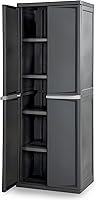
How Deep Should Garage Cabinets Be?
Garage cabinets 24 inches deep suit bulky bins and tools when the usable interior fits them. Choose a shallower cabinet if your supplies fit and you need more room beside a parked car or workbench.
On this page (7 sections)
- Are garage cabinets 24 inches deep right for your space?
- How do you measure garage cabinet depth?
- What can you store in a 24 inch deep cabinet?
- When is a shallower cabinet a better choice?
- How should you plan clearance and set up the cabinet?
- How do you keep deep shelves useful?
- Which depth should you choose for your garage?
Garage cabinets 24 inches deep suit bulky bins and tools, but only if their usable shelves and door openings fit those items. Choose less depth when it gives you the storage you need while leaving more room to park, walk, and work.
Start with your largest awkward item, not the amount of empty wall space. A deep cabinet earns its footprint when it holds something useful that a shallower model cannot.
Are garage cabinets 24 inches deep right for your space?
Choose about 24 inches of depth for bulky storage, rather than small supplies you need to see at a glance. Extra depth can hold larger cases, but it can also hide smaller items behind the front row.
A wide tool case, lidded bin, or coiled hose may benefit from front-to-back room. Screws, spray bottles, and small hand tools often need better dividers or shelf spacing more than deeper shelves.
Check what needs a 24 inch deep garage cabinet
Measure your largest stored items first, including bin lids, handles, and anything that sticks out. Measure them in the position you'll actually use, rather than assuming you can turn every case sideways.
Check the opening as well as the shelf. An item may fit inside yet be hard to pass through the doors or lift around a center obstruction.
Our garage cabinet sizes guide explains how width, depth, and height work together. For a broader storage plan, use the garage storage cabinets buying guide.
How do you measure garage cabinet depth?
Use exterior depth to plan floor space and interior depth to check storage fit. They answer different questions, and the difference can decide whether a bin fits behind closed doors.
For the footprint, measure from the cabinet's back to its farthest front point. Include projecting handles or feet, plus any gap needed behind it for trim or installation.
Inside, measure from the back panel to the closed door at shelf level. Hinges, shelf supports, and door hardware can reduce useful space, so leave clearance rather than choosing an exact squeeze.
Seville Classics: choose it for heavy tools in a narrow aisle
The Seville Classics UltraHD Solid Steel Locker Cabinet suits dense tools and supplies where aisle space matters. It measures 18 inches deep outside and 17.13 inches inside, making the storage-depth tradeoff clear.
Its powder-coated steel body has 4 shelves, with 3 adjustable in 1-inch steps. Capacity is 150 lb per shelf and 750 lb overall; follow both limits rather than treating the total as permission to overload one level.
Leveling feet help you set it up on a floor that isn't perfectly even. A 3-point keyed lock suits buyers who prefer a built-in locking system, though a cabinet lock doesn't replace secure garage access.
Skip it if your largest cases need nearly 2 feet of usable depth. Its stronger shelf capacity cannot make an oversized item fit.
What can you store in a 24 inch deep cabinet?
Store bulky items that you can still remove easily, such as tool cases and larger containers. Choose shelf heights that let you lift each item out without emptying the shelf above.
For small supplies, use labeled bins that pull forward as a group. A deep shelf works better when you can retrieve the back row without reaching over loose bottles or sharp tools.
Keter: choose it for a narrow wall with room in front
The Keter Resin Storage Cabinet With Doors suits buyers with limited wall width and extra front clearance. Its assembled footprint is 25.5 inches deep by 19.6 inches wide, so it extends beyond a strict 24-inch boundary.
It has 5 shelves rated for 55 lb each. That layout suits supplies separated into smaller groups, provided each container fits the shelf and door opening.
Keter describes the resin construction as resistant to rust, rot, and moisture damage. The doors accept a padlock, which isn't included.
Skip this cabinet if your floor plan stops at exactly 24 inches or you need broad shelves for wide cases. Its narrow exterior width makes checking the usable opening especially useful.
Use our garage cabinet ideas to decide what belongs behind doors. For load planning, read how much weight a metal cabinet shelf can hold and follow your chosen cabinet's own limits.
When is a shallower cabinet a better choice?
Choose less depth when it preserves useful access without excluding your gear. A cabinet beside a parked car should let you open its doors and remove a bin without moving the vehicle every time.
Shallower shelves can also make small supplies easier to see. That helps when your main problem is finding tape, fasteners, or cleaning cloths rather than storing bulky equipment.
Suncast: choose it for tall, mixed-size storage
The Suncast 80 Inch Mega Tall Resin Cabinet suits buyers who can use height and width instead of extra depth. Its stated body dimensions are 40 inches wide, 20.25 inches deep, and 80.25 inches high, though Suncast also gives a separate 22.25-inch depth figure.
Resolve that depth difference before ordering for a tight space. Allowing for the larger figure in your floor plan is sensible until you confirm the assembled footprint.
Its 3 adjustable reinforced shelves hold up to 75 lb each, allowing different heights for cases and supplies. Suncast says its multi-wall resin panels resist dents, rust, and rot.
Skip it beneath low overhead storage or if you lack the wall width it needs. Its padlockable doors and upper and lower latches help keep contents enclosed, but don't solve a clearance problem.
EHHLY: choose it for flexible storage near 24 inches
The EHHLY 66 Inch Resin Garage Storage Cabinet suits buyers wanting near-24-inch depth without an extra-tall cabinet. It measures 23.23 inches deep, 31.49 inches wide, and 66.2 inches high.
Its 4 adjustable shelves have 8 placement positions. That gives you options for mixed container heights, though you should plan the layout around your tallest items before filling it.
The HDPE cabinet has double-layer blow-molded construction and padlock-compatible doors. EHHLY describes assembly as tool-free.
Skip it for heavy loads unless you first confirm the shelf capacity with EHHLY. Exterior dimensions and adjustable shelves establish fit options, but they don't guarantee a safe weight limit.
If mobility matters more than depth, compare the tradeoffs in our guide to garage cabinets on wheels.
How should you plan clearance and set up the cabinet?
Plan for the cabinet, open doors, and the person carrying an item. An empty aisle can look roomy until you try to back out holding a large case.
- Tape the exterior footprint on the floor, allowing for wall trim and projecting parts.
- Mark the door swing and stand where you'd normally reach inside.
- Park your vehicle and check car-door access, walking routes, and nearby drawers.
- Carry your largest bin through the space to check removal room.
- Check overhead pipes, shelves, and the route used to bring the cabinet inside.
Assemble near the final location, leaving enough room to work around the panels. Follow the cabinet instructions for leveling and anchoring before loading; our guide to anchoring garage cabinets explains the planning involved.
Place heavy items low and spread their weight across the shelf. Don't use a cabinet's total capacity as a shelf rating, and don't climb on shelves to reach the top.
How do you keep deep shelves useful?
Use pull-out containers and clear shelf zones so depth doesn't turn into hidden clutter. Keep frequent-use items near the front and occasional supplies behind them.
Group items by task, such as car care or painting, so one bin brings the needed supplies to your work area. Our garage cabinet organization guide offers more ways to arrange those groups.
Keep stored liquids closed and upright, following their labels for storage conditions. A general storage cabinet isn't a substitute for a cabinet required for a particular hazardous material.
Wipe up spills promptly and dry shelves before putting items back. Keter recommends soap and water for its cabinet; follow each brand's care directions and avoid abrasive cleaning that could damage finishes.
Recheck shelf supports, door alignment, and fasteners as part of routine garage cleanup. Address a loose support or leaning cabinet before adding more weight.
Which depth should you choose for your garage?
For garage cabinets 24 inches deep, buy around your largest item and tightest clearance. None of these options is exactly that depth, so treat them as alternatives rather than exact-size matches.
- Choose Keter for a narrow wall where you can spare extra depth in front.
- Choose Suncast for tall, wide storage with adjustable shelf spacing, after resolving its depth measurements.
- Choose EHHLY for a near-24-inch footprint with a lower overall height, after confirming capacity for heavier gear.
- Choose Seville Classics for heavier supplies that fit shallower shelves beside a tighter aisle.
If only one oversized item needs a deep cabinet, consider giving it a separate storage spot instead of making every shelf deeper. Finish by checking the garage cabinet sizes guide against your full width, height, and depth measurements.
Frequently asked questions
Are 24 inch deep garage cabinets worth it?
Yes, if the extra usable depth lets you store bulky bins or tools that won't fit in a shallower cabinet. They make less sense for rows of small bottles or hand tools, especially beside a parked car where the larger footprint can limit access.
How deep should garage cabinets be for tools?
Choose the shallowest cabinet that holds your largest tool in its stored position without pressing against the doors. Measure cases, handles, and attached parts, then check interior depth and the door opening; heavy tools also need suitable shelf capacity, even when they fit with room to spare.
Is cabinet depth measured with the doors?
Exterior depth can include the doors, but measurement points vary by cabinet; handles, feet, and other projections may also count toward the stated size. For placement, use the farthest outside points and add any required wall gap; for storage, use the space behind the closed doors.
How much space should I leave in front of garage cabinets?
Leave enough space to open the doors, stand in front, and remove your largest stored item while keeping the route through the garage clear. There isn't one clearance that suits every layout; mark the footprint and door swing, then check them with your vehicle parked in its normal position.