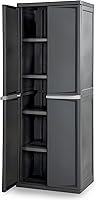
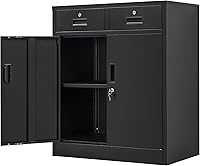
Best Hanging Metal Garage Cabinets: How to Choose
The best metal wall hanging garage cabinets mount flush on a steel rail, keep depth near 12 inches and lock with a key. Check your wall material, shelf load and door swing before you buy, because the cabinet cannot hold more than the wall does.
On this page (8 sections)
- What makes hanging metal garage cabinets stay put?
- Which wall will carry metal wall hanging garage cabinets?
- How much should you load a hanging garage cabinet?
- How deep should wall mounted garage cabinets be?
- Do you need locking metal wall cabinets?
- How should you mount cabinets on a garage wall?
- Which of these three hanging cabinets fits your garage?
- What should you check before you buy metal wall hanging garage cabinets?
The best metal wall hanging garage cabinets keep your floor clear and your tools locked away. They are steel boxes that fix to the garage wall, so the car, the mower and the workbench keep their space.
This guide explains what separates a cabinet that stays put from one that sags, and which of three models fits which job.
Wall mounted garage cabinets are sold in two mounting styles: a steel rail that hangs the cabinet flush, or brackets fixed straight to the back panel. The mounting method matters more than the paint color.
So does the wall behind it.
What makes hanging metal garage cabinets stay put?
The wall fixing decides whether a hanging cabinet holds its load. Steel cabinets are light on their own, but the contents are not.
A 31.8 lb cabinet can carry far more than its own weight once shelves are full of paint, power tools and spare parts.
The cabinet's mounting design spreads that load. A rail fixed across two or more studs shares the weight over a long strip of wall.
A bracket kit with four corner fixings concentrates the load at four points. On masonry, expansion bolts take the load in the concrete or brick rather than in the fixing's grip alone.
Hanging metal garage cabinets also need a flat wall. A rail will twist on an uneven surface, and the doors will bind when you close them.
Check the wall with a straight edge before you drill.
Rail mount versus bracket mount
Rail mount suits long runs of wall and lets you slide the cabinet into the right spot before tightening it. It also makes a flush fit easier, since the rail sets the depth for you.
The VEVOR uses a hanging rail and mounts flush to concrete or wood.
Bracket mount is simpler for a single cabinet in a tight corner. It needs fewer parts and less wall width, but there is less room for adjustment.
The Manhattan Comfort kit includes mounting brackets and is designed to save floor space.
Pick a rail for a row of cabinets along one wall. Pick brackets for one cabinet squeezed between a door frame and a shelf.
Either way, read the fixing instructions and follow the wall type named there.
Which wall will carry metal wall hanging garage cabinets?
Concrete, brick and solid studs are the walls that suit these cabinets best. Each one needs a different fixing, and the cabinet's rated load only counts when the fixing matches the wall.
Concrete and brick take expansion bolts. The bolt expands into the hole and grips the masonry, so the load goes into the wall rather than into a thin anchor shell.
The STEELIST cabinet includes expansion bolts for concrete, brick or solid studs.
Wood studs take lag screws long enough to reach the center of the stud. A cabinet spanning two studs spreads the load better than one hung on a single stud.
Find the studs with a detector before you drill.
Drywall alone is the weak point. A plywood backer board screwed into the studs gives the cabinet something solid to grip.
Without that, a loaded cabinet can pull the drywall down.
Matching the cabinet to the wall
Choose the cabinet after you know the wall. On a bare concrete wall, a rail-mounted cabinet with expansion bolts is the quickest route.
On a stud wall in a finished garage, brackets and lag screws avoid a long rail.
If the wall is mixed, fix the rail into the sturdier sections and use the right fixing for each. A level line across the wall keeps every cabinet at the same height.
That matters more for a row than for a single unit.
How much should you load a hanging garage cabinet?
Load per shelf is the number to compare, and 120 lb per shelf is the figure the strongest models here reach. The VEVOR Metal Wall Cabinet lists 120 lb per shelf across four adjustable levels.
The STEELIST cabinet lists 120 lb per shelf too.
That rating describes the shelf, not the wall. A cabinet rated for 120 lb per shelf still needs a fixing that carries the total: the cabinet weight plus everything inside it.
A 31.8 lb cabinet with three loaded shelves soon reaches several hundred pounds.
Hanging metal garage cabinets also behave better when heavy items sit low. A full shelf of paint tins at head height is harder to lift and puts more strain on the top fixings.
Put dense tools on the lower shelf and light, bulky items above.
Load limits by cabinet here
The VEVOR's 120 lb per shelf suits tool boxes, power tools and spare parts. Its 30 x 12.2 x 30 in frame gives four shelf positions, so taller items can fit on one level.
The STEELIST cabinet lists the same 120 lb per shelf in a 13.78 x 25.98 x 27.95 in frame. That extra depth and slightly smaller width changes how you pack it.
Deep shelves take paint cans and storage tubs; shallow shelves take hand tools and boxes.
The Manhattan Comfort cabinet is lighter at 33 lb and carries one adjustable shelf. Plan its load around a single divider rather than three tiers.
Our metal storage cabinet for garage guide covers shelf planning in more detail.
How deep should wall mounted garage cabinets be?
Twelve to 14 inches deep is the sweet spot for most garages. A cabinet at that depth holds tools and supplies without pushing into the walkway beside a parked car.
Anything deeper starts to feel like a hazard when the door swings open.
The VEVOR cabinet is 12.2 in deep and 30 in wide. The Manhattan Comfort unit is 12.5 in deep and 30.3 in wide.
The STEELIST cabinet is 13.78 in deep and 25.98 in wide. The three sit in the same shallow band.
Depth also sets the door swing. A shallow cabinet on a hinged door needs about its own width in clear space in front.
In a narrow garage, measure that swing against the car door and the walkway before you fix anything.
Height and width choices
Height matters when you stack cabinets. The three models here are 30 in, 30 in and 27.95 in tall.
A row of matching heights looks tidy and lets you line up the shelves.
Width decides how much wall one cabinet takes. A 30 in cabinet fits a standard stud bay without crossing into the next one, which makes fixing simpler.
The narrower 25.98 in STEELIST cabinet leaves more room for a second unit beside it.
Measure the wall from the corner to the first obstruction. Then subtract the cabinet width and the gap you want at each end.
A tall cabinet can fill more of that space; our tall garage cabinet guide covers when height beats width.
Do you need locking metal wall cabinets?
A keyed lock is worth having on a garage cabinet, but it is a deterrent, not a safe. All three cabinets here lock with a key.
That keeps children, visitors and casual hands away from tools and chemicals.
The lock type varies in the details. The VEVOR has locking doors with magnetic closures that keep them shut between openings.
The Manhattan Comfort uses a key lock and key with recessed handles. The STEELIST cabinet also uses a key lock.
Magnetic closures help in a working garage, because the doors stay closed when you carry something past. Recessed handles avoid snagging a sleeve or a ladder as you walk by.
If you store expensive power tools, treat the cabinet lock as one layer. A locked house door and a locked garage door do more work than any cabinet lock.
Our metal storage cabinet page compares lock options across cabinet styles.
Lock and handle details that matter
Keyed locks mean keeping track of keys. A key hook beside the cabinet saves hunting through drawers.
If two people use the garage, plan for a spare.
Magnetic catches on the VEVOR keep the doors from swinging open when the cabinet is unprotected. That is useful when you are moving things in and out during a project.
Recessed handles sit flush with the door face. That matters in a tight parking bay, where a protruding handle can catch on a car mirror or a bike.
How should you mount cabinets on a garage wall?
Mount the cabinet at a height that leaves the top shelf within reach and the bottom clear of the floor. A rail fitted level across the wall is the first step.
Hang the cabinet, then check the doors before loading it.
Work in this order:
- Find the studs or mark the masonry fixing points.
- Draw a level line at the top of the rail or bracket.
- Fix the rail or brackets with the correct fixing for the wall.
- Lift the cabinet into place with help and check it sits flat.
- Adjust the doors so they close without binding.
- Load the lower shelf first and check the fixing again.
Hanging metal garage cabinets alone is awkward because of the size and the reach. A second person steadies the cabinet while the first lines it up.
On a rail, the cabinet slides on after the rail is set.
Choosing the mounting height
Set the bottom of the cabinet above the tallest thing that passes under it. A broom handle or the car roof line gives you a working figure.
Leave enough room above the cabinet to open the doors fully.
If the garage ceiling is low, a 30 in cabinet may only fit one row. Measure from the floor to the ceiling and subtract the cabinet height and the clearance you need.
A metal garage storage cabinet that stands on the floor may suit a low room better.
Which of these three hanging cabinets fits your garage?
The STEELIST Garage Storage Cabinet is the best pick for most garages, because it combines a 120 lb per shelf rating with a compact 25.98 in width that fits a single stud bay. The VEVOR is close behind for a flush rail mount on concrete.
The Manhattan Comfort suits a lighter load and a sleeker look.
STEELIST Garage Storage Cabinet: best for most garages
The STEELIST cabinet is the best overall pick here. Its 120 lb per shelf rating matches the strongest model in this group, and its 25.98 in width fits neatly between studs.
The 27.95 in height leaves more room above it than the two 30 in cabinets.
It arrives with pre-drilled mounting holes and expansion bolts for concrete, brick or solid studs. That covers the three wall types most garages use.
STEELIST says assembly takes about 20 minutes with the included instructions and hardware.
The adjustable shelf moves to several heights. That helps when you store tall bottles next to flat tool cases.
A keyed lock and a neutral grey and black finish round it out.
Pick the STEELIST for a single cabinet on a masonry or stud wall, especially where wall space is short. It carries a real load and takes less width than the others.
VEVOR Metal Wall Cabinet: best for a flush rail mount
The VEVOR is the best pick when you want a cabinet hung flush and level on a long wall. Its rail-mount design fixes to concrete or wood and lets you set the position before the cabinet goes on.
The result sits tight to the wall with no gap behind it.
The 120 lb per shelf rating and four adjustable levels cover tools and supplies of different heights. Dual side-opening doors give quick access, and magnetic closures keep them shut.
A pre-drilled cable port in the bottom lets you charge a tool battery inside the cabinet.
The powder-coated SPCC cold-rolled steel resists rust and corrosion. VEVOR backs it with a one-year limited warranty.
At 31.8 lb, it is light enough for two people to lift onto the rail.
Choose the VEVOR for a concrete wall and a flush fit, or for a workshop where you want to charge tools behind a locked door.
Manhattan Comfort Fortress Floating Cabinet: best for a lighter, sleeker load
The Manhattan Comfort cabinet is the best pick when the load is light and the look matters. Its charcoal grey finish and recessed handles give it a cleaner face than the other two.
At 33 lb it is the lightest cabinet here.
It carries one adjustable shelf, so plan its contents around a single divider. The key lock and key keep tools and accessories secure.
Mounting brackets are included, and the cabinet saves floor space by hanging on the wall.
The 24-gauge metal build suits spare parts, hand tools and supplies rather than a shelf full of paint tins. Its 12.5 in depth and 30.3 in width sit in the same band as the others.
Pick the Manhattan Comfort for a lighter load in a visible spot, such as a home garage that doubles as a workspace. If you need maximum shelf load, choose the STEELIST or the VEVOR instead.
What should you check before you buy metal wall hanging garage cabinets?
Check the wall type, the door swing and the cabinet's depth before you order. These three points decide whether the cabinet fits and stays up.
The load rating comes fourth, because a strong shelf on a weak wall still falls.
Start with the wall. Note whether it is concrete, brick or studs, and whether any part is drywall only.
That tells you which fixing you need and whether a cabinet's included hardware matches.
Then measure the clear space in front of the wall. Add the cabinet depth to the door swing.
A cabinet that blocks the car door or the walkway will annoy you every day.
Finally, match the cabinet's width to the wall between obstructions. A 30 in cabinet needs a 30 in clear run plus a small gap at each end.
Our best metal garage storage cabinets roundup compares more models if none of these three fit.
Hanging metal garage cabinets work best when the wall, the load and the door swing all line up. Pick the STEELIST if you want the best all-round cabinet for most garages.
Pick the VEVOR if a flush rail mount on concrete is the priority. Pick the Manhattan Comfort if you want a lighter, sleeker unit in a visible spot.
Measure the wall first, then choose the cabinet that fits it.
Frequently asked questions
Do metal wall hanging garage cabinets need a stud wall?
Not always. Concrete, brick and solid studs can all carry a cabinet, but each needs the right fixing.
A hollow drywall garage needs extra care or a different approach, so match the mount to what is behind the steel.
What weight can a hanging metal garage cabinet hold?
Load varies by model. The VEVOR Metal Wall Cabinet is rated at 120 lb per shelf, and the STEELIST cabinet also lists 120 lb per shelf.
The wall fixing still has to carry that load plus the cabinet weight.
Can you hang metal garage cabinets on drywall only?
A cabinet full of tools is too heavy for drywall alone. Add a plywood backer board fixed to the studs, or find the studs and fix into them.
On masonry walls, use expansion bolts as the manufacturer directs.
Are locking metal wall cabinets safe for power tools?
A keyed lock keeps casual hands out and is fine for most garages. It will not stop a determined thief, so keep high-value tools behind a deadbolt on the house door rather than relying on the cabinet lock.
Should I install the rail first or the cabinet first?
Fit the rail to the wall first, level it, then hang the cabinet on the rail and check the doors. Cabinet-first bracket kits exist, but the rail method lets you adjust the position before the full weight goes on.